
News · Markets · US
With Anthropic's IPO, Let the Buyer Beware
Anthropic's prospectus offers the first public look at its books. What a buyer would need to know before the price is set.
For information only. Not investment advice. Disclaimer
AI-generated summary, reviewed by the editor.
- Anthropic's prospectus shows second-quarter operating profit of $974 million on revenue of about $11.6 billion, after an operating loss of about $1.7 billion in the first quarter.
- The first-half net loss was about $80.7 billion, mostly a $72.4 billion non-cash fair-value charge; non-cancelable purchase commitments were $265.6 billion against $131.7 billion of cash and short-term investments.
- A Class F share held by an entity the cofounders control carries 50.1% of voting power; the filing lacks a capitalization table.
It restates the article and adds no new facts. How we use AI
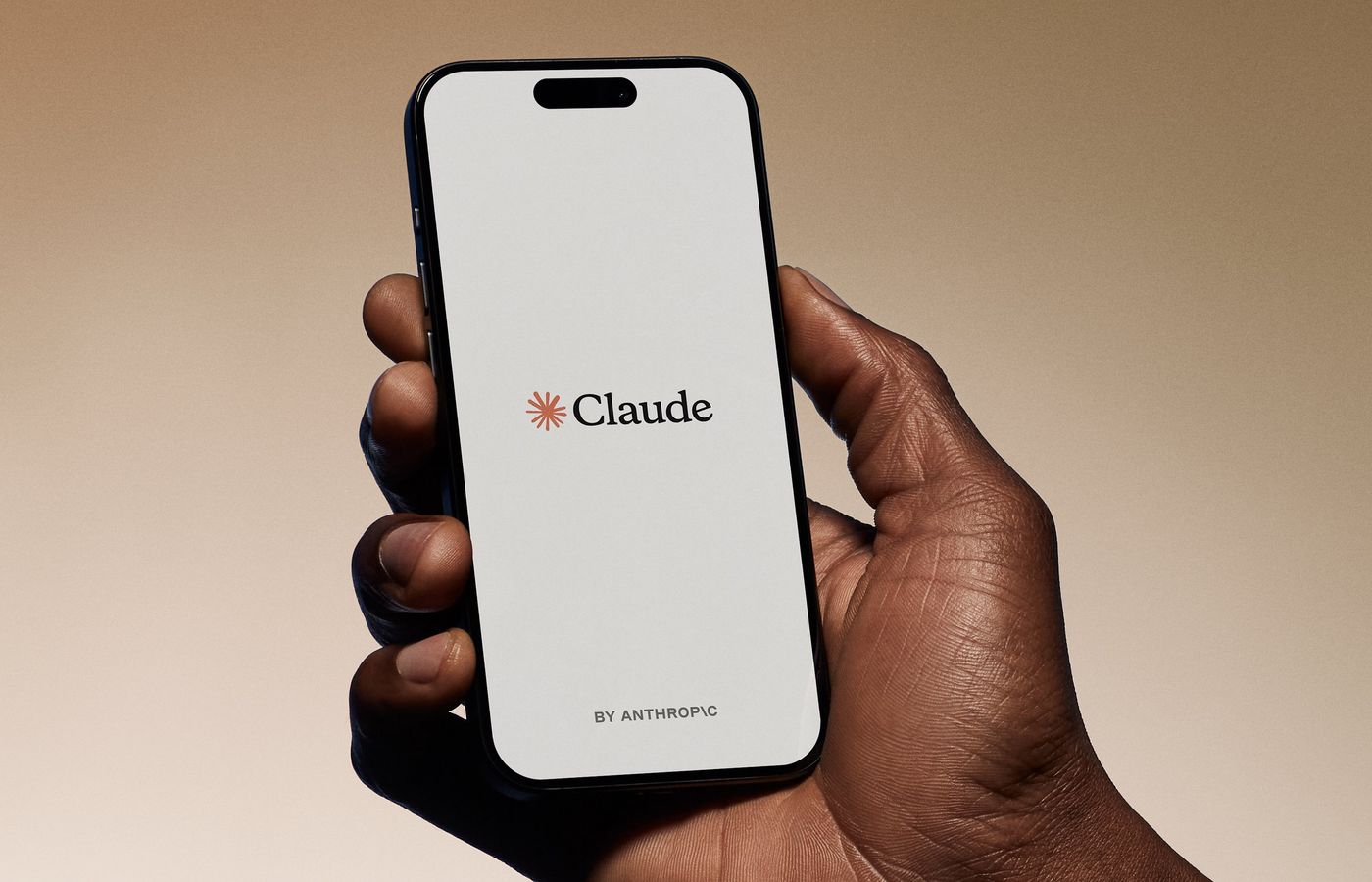
Before Anthropic's founders took their company public, they asked executives who had done it before what they should know. One answer stuck, the founders wrote in the prospectus the company filed on Monday--never let your company be worth a dollar more than it is actually worth.
Though Anthropic hasn't said how much it is seeking to price the shares at, its plans to list Class A shares with Goldman Sachs and Morgan Stanley named first among the underwriters offers the first public look at the books of a company that says it has raised $141.1 billion and held $131.7 billion in cash and short-term investments on June 30.
A Piece of History
Anthropic was founded in 2021 by a team of researchers who, in the prospectus's words, were responsible for many of the breakthroughs that define modern AI.
Its product, Claude, went from zero dollars in revenue at commercial launch in the first quarter of 2023 to $41 million in annual revenue 2023. Revenue surged nearly ten-fold in 2024 and stood at roughly $4.59 billion in 2025, Anthropic said.
The money to build it came from investors and partners.
By June 30, the company says, it had raised $141.1 billion. Amazon holds convertible notes that CNBC puts at about $6.2 billion in principal. A 2026 agreement with Amazon provides for up to $20 billion more, but is conditional on computing capacity being delivered.
What Anthropic sells is mostly access by the token.
The prospectus calls the model "pay-for-intelligence," metered by usage, and makes up for the majority of revenue as businesses paying per use. About 48% of first-half revenue came through the large cloud providers, the filing showed. Those platforms bill the customers and pass the money along net of their fees.
A Profitable Quarter
The second quarter was the first time Anthropic made a profit at the operating level. Operating profit according to standards required in the U.S. stood at $974 million on revenue of about $11.6 billion. This was after an operating loss of about $1.7 billion on $4.7 billion of revenue in the first quarter.
Anthropic's prospectus says revenue for the three months ended June 30 grew 1,368% from a year earlier while compute and infrastructure expenses grew 300%. For the half, operating cash flow was about $3.93 billion and capital spending about $482 million.
What investors would be interested in would be the customers.
As of Sept. 30, more than 11,900 customers each paid at least $100,000 on a trailing-twelve-month basis, more than 1,900 paid at least $1 million, and about 250 paid at least $10 million.
Net revenue retention stood at about 900%. The company calculates it by dividing the latest three months of revenue from customers who paid anything a year ago by what those same customers paid in the same three months a year earlier. It leaves out Claude Pro and Max subscribers. A cohort that started small can reach a ratio like that without any customer signing a contract nine times larger.
Each employee supports more than $6.6 million of trailing-twelve-month revenue, the prospectus says, up from $1.4 million a year earlier.
The Achilles' Heel
Anthropic reported a first-half net loss of about $80.7 billion. About $72.4 billion of it was a fair-value charge on convertible notes, an accounting remeasurement in which no cash left the company.
The GAAP operating loss for the half was about $693 million. Adjusted operating income, a non-GAAP figure whose full reconciliation could not be verified, was about $1.62 billion.
This matters to anyone buying shares.
Anthropic owed about $6.2 billion at the end of June to Amazon, whose ownership is capped at 12%.
Conversion at the IPO would erase a liability without spending cash, and it would hand new shares to the holders, diluting everyone else. This allows for rollover notes when a balance would push Amazon past its cap, so some debt could survive the offering.
Available Facility Amount by block of Delivered Capacity, $ billion
Exhibit 4.3 sets the Available Facility Amount at $0 on signing, and the amount of Delivered Capacity that unlocks each $5 billion block is redacted. The exhibit does not state the 12% ownership cap that CNBC reports. It points to an "Ownership Threshold" defined in the notes, which the portion reviewed does not include.
Cash Against Contracts
At the end of June, Anthropic held $112.4 billion in cash and cash equivalents and $19.3 billion in short-term investments, according to the prospectus. That doesn't however tell someone how much of that is restricted or pledged.
The obligations are larger.
Non-cancelable purchase commitments of $265.6 billion at June 30 were up from $54.6 billion at Dec. 31, 2025, and undiscounted future lease obligations stood at $321.4 billion. Divided out, the commitments alone are about twice the cash.
Partner contracts totaled $657 billion, of which $498 billion is described as non-cancelable. The company did not say what the total was. Instead it said substantially all of the commitments are for compute and infrastructure, with part due before the end of 2030 and substantially all of the rest between 2031 and 2045.
Those totals cover different dates and may overlap, so they can't be added. However, the named contracts are easier to pin down.
Amazon Web Services is owed at least $110 billion through April 2036, payable regardless of usage. Google is owed about $114.5 billion through 2033 and Microsoft about $44.9 billion. A separate $42 billion note facility with Broadcom pays certain chip-rental fees without cash, and converts at generally 90% of market price, or 85% during a breach period. Several triggers in that agreement, including a "Revenue Breach," are redacted.
Selected terms, with the section where each appears
The exhibit prints a 9.00% interest rate, or 13.00% for notes issued during a Breach Period, but the definitions of Breach Period, Revenue Breach and Revenue Default Event are blacked out. Section 3.2 makes the absence of a Revenue Default Event a condition.
First-half free cash flow was about $3.45 billion, or roughly $6.9 billion if simply doubled. According to Fortune, a move toward owning facilities and equipment could push capital spending well above the $482 million spent in the half.
Judging a company about to carry a heavier fixed-cost base by its recent free cash flow would understate what it needs.
The analysis of the filing offers three illustrative annual net burn rates after compute payments. A $10 billion burn would last 13.2 years on the reported cash, $30 billion 4.4 years and $50 billion 2.6 years. Those are the analyst's scenarios, not company forecasts, and they leave out IPO proceeds and any new financing.
Years of runway at three annual net burn rates, after compute payments
What You Get
Anthropic is a public benefit corporation, so its board must weigh shareholders' financial interests against a stated public purpose. Class A shares carry one vote each, but the prospectus describes a structure that keeps the board out of their reach.
A Long-Term Benefit Trust with no financial stake elects four of the seven directors, and the founders' letter says the cofounders elect the other three. A single Class F share, held by an entity the co-founders control, carries 50.1% of the total voting power, which makes Anthropic a "controlled company" under Nasdaq rules.
Before the offering, the company says it will set aside 5% of its equity for a fund devoted to the public good, with another 2% for every sustained 50% rise in the share price from the IPO price.
The 2026 Employee Stock Purchase Plan lets the share reserve grow each year from 2027 through 2036 by the lesser of 1% of outstanding shares or an amount the board sets, with purchases at 85% of fair market value.
The founders' letter, which opens the prospectus, tells investors that its decisions may "run counter to investors' expectations." It describes forward investments in computing that "may seem irresponsibly large at first glance."
It says the company held back the general release of Claude Mythos Preview over cybersecurity risk, "forgoing substantial revenue and ceding ground to competitors," and that it will keep Claude free of advertising. The company says it will "always be willing to forgo some upside in exchange for downside protection," and calls the intended posture "bold but sane."
The Final Word
The operating business has started to generate cash, and the second quarter shows revenue growing much faster than computing costs. The filing does not show that Anthropic can pay for its infrastructure without going back to investors. An analysis of the filing calls the near-term position strong and the long-term resilience conditional.
A buyer would need two key pieces of information that the filing doesn't disclose.
A capitalization table showing how many shares the notes become and how much note debt remains, and a schedule of what the company owes in each of the next three years.
Restricted cash, the revolving credit facility's terms, the split between usage and subscription revenue and the share of revenue from the largest customers are also unverified.
At a price that assumes the best case, the margin for error is thin. At a price that treats the compute contracts as debt-like, it is wider.
The founders put their advice about valuation in front of every prospective buyer. What they haven't yet printed is the price that would show how closely they followed it.
Disclosure: The author, Icarus Asia and Asian Value Investor hold no stake in Anthropic and do not intend to acquire one.
Comments
Sign in with LinkedIn to join the discussion. Your LinkedIn name and photo appear publicly beside your comment. Please keep it civil and on topic.