
News · Markets · US
Judge Lets Trading Begin in Perpetual Futures, Says Regulator Likely Overstepped
A court refused an emergency request by Cboe, Citadel Securities and others to halt new futures contracts that don't expire. International investors already trade similar products offshore, and the case will help decide whether that business moves onto American exchanges.
For information only. Not investment advice. Disclaimer
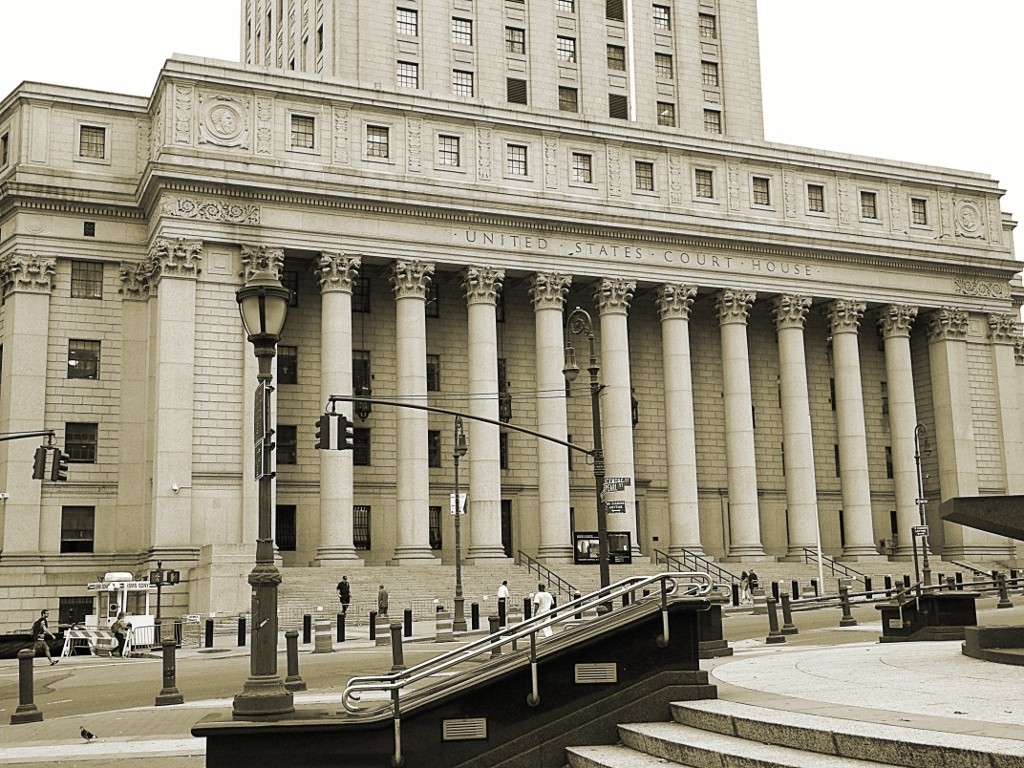
A federal judge in Manhattan said Tuesday that the agency that oversees futures trading probably exceeded its authority when it cleared a new kind of contract tied to individual U.S. stocks. But she declined to stop the trading.
By early Wednesday, Kalshi was listing the contracts, known as perpetual futures because they never expire, on Qualcomm, McDonald’s, Amgen and Costco, according to RG, a prediction-markets news site.
The ruling by Judge Valerie Caproni of Federal District Court leaves in place approvals granted by the Commodity Futures Trading Commission while the Capital Markets Alliance Association pursues a broader challenge. The trade group’s members include Cboe Global Markets, Citadel Securities and the Healthy Markets Association. It says the contracts are in fact swaps on securities, which Congress put under the Securities and Exchange Commission. The CFTC says they are security futures products that both agencies oversee.
The stakes reach well past a jurisdictional dispute in Washington. Perpetual futures have traded on crypto-native platforms such as Hyperliquid, a decentralized venue, and have lately been pointed at shares. Trading in perpetuals tied to real-world assets reached $1.4 trillion in the first half of this year, nearly 60 times the $23.6 billion of the same period in 2025, Nikkei Asia reported. The lawsuit turns on which American agency oversees that business as U.S. exchanges enter it.
First half of each year, US$
View data
| Period | Trading, US$ |
|---|---|
| H1 2025 | 23.6 billion |
| H1 2026 | 1.4 trillion |
Judge Caproni’s three-page order, issued after a telephone conference with the parties, comes down hard on the regulator’s legal footing.
“Plaintiff is likely to succeed on the merits of its claim that the CFTC’s action in approving the trading of single stock perpetual derivatives as security futures exceeded its statutory authority,” she wrote.
Her reasoning rested on how the contracts are built. A security future requires a “sale for future delivery of a single security.” The perpetual contracts, by definition, “do not provide for” that, she wrote, and so “do not appear to satisfy the definition of a ‘security future.’” They look instead like swaps, which the order says are “subject to regulation by the Securities and Exchange Commission, not by CFTC.”
She found the public interest on the alliance’s side as well.
“The CFTC’s actions seem to represent a major disruption to the equities market, and the public, including Plaintiff, would be served by preventing such a disruption before it occurs,” Judge Caproni wrote.
The alliance still lost the motion. To win a restraining order, it had to show harm that was “neither remote nor speculative, but actual and imminent,” a standard the order drew from Second Circuit precedent. The declarations from its members were “conjectural as to the harm Plaintiff’s members would suffer, focusing on harmful events that could occur absent emergency relief.”
The CFTC’s chairman, Michael S. Selig, announced the same day that the contracts could begin trading. Perpetual futures on individual equities “can begin trading for the first time on CFTC-registered exchanges,” he said in a statement, and the contracts “were deemed approved by the Commission, pursuant to Commission Regulation 40.3, as security futures products.”
He cast the move as a way to bring trading home. Mr. Selig said he believes that bringing such products into regulated markets “ensures that American investors and traders can access these products within the protections of the CFTC’s proven regulatory framework, rather than being forced to turn to offshore, and often unregulated, venues.”
The order covers approvals tied to applications from KalshiEX, Bitnomial Exchange and Coinbase Derivatives. It follows the CFTC’s May 29 approval of a bitcoin perpetual on KalshiEX, which Mr. Selig has called “the first true bitcoin perpetual futures contract on a CFTC-regulated exchange.”
The alliance sued Nov. 2. Its complaint says the approvals violate the Administrative Procedure Act because the CFTC gave no explanation for its decision, did not acknowledge that it had long treated perpetual derivatives as swaps, and failed to reasonably consider the effect on investors and securities markets, according to a release from the group. It asks the court to vacate the approvals and declare the products security-based swaps.
“The hasty roll out of financial products that circumvent well-established regulatory frameworks erodes investor protection and undermines the integrity and resiliency of the American financial system,” said Adam Ford, the alliance’s secretary.
Cboe, which joined the action and is seeking an injunction, framed the case as one of investor protection. Craig Donohue, its chief executive, said the CFTC’s actions “threaten to erode the regulatory framework that has protected investors and governed U.S. securities markets for more than nine decades.” Cboe and others, including legislators, had raised concerns in public comments and industry forums “to no avail,” he said.
Mr. Donohue also took on the obvious suspicion, that an exchange operator is protecting its own turf.
“If this were simply a commercial issue, Cboe could bring these products to market on CFTC regulated trading and clearing platforms that it operates,” he said. “This issue, however, is about investor protection for securities trading and the rule of law.”
Why Global Investors Are Watching
Three TD Securities analysts wrote last November, in a note that said it reflected their personal views: “A perpetual future is a futures contract that never expires.” Traders do not roll positions from one month to the next. They pay or receive a funding rate, typically settled every eight hours, that keeps the contract’s price near the underlying asset’s.
With no final settlement, the analysts wrote, the contracts differ from traditional futures. “Their payoff structure is therefore closer to a swap,” they said, a description near the one Judge Caproni reached.
For investors outside the United States, the draw is access. In August, perpetuals on Unitree, a Chinese company that listed in Shanghai on Aug. 19, drew more than $105 million in trading on Hyperliquid within 24 hours of the stock’s debut, Nikkei Asia reported.
“What used to be a fringe product for crypto-native traders is now how international investors access Chinese names they can’t easily trade otherwise,” said Dilin Wu, a research strategist at Pepperstone.
Savvy retail investors across Asia Pacific made up most of the traders in perpetuals on Unitree and ChangXin Memory Technologies, Mr. Wu said, along with family offices and smaller institutional pools without direct access to China’s Qualified Foreign Institutional Investor program. The perpetuals market as a whole remains dominated by retail investors comfortable with crypto, Nikkei reported, and large asset managers and insurers are largely absent because the instruments face little regulatory oversight. In most markets, including Hong Kong and Singapore, only professional accredited investors may trade them.
Hong Kong’s Securities and Futures Commission drew its own line in February, setting out a framework under which licensed virtual-asset platforms can offer leveraged perpetual contracts to professional investors only. The goal, said Eric Yip, an executive director at the commission, is “responsible leverage that supports liquidity without undermining financial stability.”
What the CFTC’s decision means for those investors is not yet clear. Neither Mr. Selig’s statement nor the court’s order says whether investors outside the United States may trade the new contracts, or on what terms. Coinbase, whose derivatives unit is one of the three applicants the order names, already offers perpetuals on stocks such as Apple, Microsoft, Nvidia and Amazon outside the United States, K33 Research reported in September.
The risk is leverage, and the TD analysts were explicit about it. “Historically, margin exposure has been a catalyst in nearly every major market dislocation,” they wrote. The note also put South Korea’s share of overnight trading in U.S. stocks at about 40 percent.
Perpetuals can also trade at significant premiums or discounts to the underlying stock when its exchange is closed, Nikkei reported. “When the stock market finally opens, brutal price convergence will trigger cascading liquidations,” Mr. Wu said.
What Comes Next
The CFTC’s response to the alliance’s request for a preliminary injunction is due Friday, Nov. 6, and the alliance’s reply is due Tuesday, Nov. 10. The order sets no hearing and says the schedule is “subject to change by the assigned District Court Judge.”
The test the judge recited asks whether a plaintiff is likely to suffer irreparable harm “in the absence of preliminary relief,” the element on which the group fell short. Closing that gap would require declarations that point to harm that has happened or is about to happen, not events that “could occur.”
CME Group sued the CFTC in June over the bitcoin perpetual approval in federal court in Washington, and the CFTC has asked the court to dismiss the case. The Hyperliquid Policy Center filed a brief on the CFTC’s side in September, The Block reported. Its lawyer, Elizabeth Prelogar, who served as solicitor general in the Biden administration, wrote in the brief: “If CME prevails, every product that the CFTC approves will invite litigation from incumbents who prefer the status quo, and the pace of progress in the U.S. futures markets will slow to a crawl.”
The SEC, which is not a party to the Manhattan case, has its own process under way. In June, it and the CFTC jointly asked the public to comment on whether the definitions of swaps and security-based swaps under the Dodd-Frank Act still fit newer products. “Clarification is long overdue on Title VII definitional issues, including event-based products,” said Paul S. Atkins, the SEC’s chairman. Mr. Selig’s statement describes the stock contracts as part of continuing cooperation between the agencies.
Until the judge rules on the injunction, the contracts keep trading. The order does not say what would happen to positions opened in the meantime if the approvals were later vacated.
Sources
- Order denying temporary restraining order, Capital Markets Alliance Association v. CFTC, No. 26-CV-9608 (S.D.N.Y. Nov. 3, 2026), Dkt. 11
- CFTC Chairman Michael S. Selig, Statement on Equity Perpetual Futures, Nov. 3, 2026
- CFTC Press Release 9319-26, Nov. 3, 2026
- Capital Markets Alliance, Business Wire release
- Cboe Global Markets statement, Nov. 3, 2026
- RG, Nov. 4, 2026
- Nikkei Asia via KrASIA, Aug. 29, 2026
- TD Securities, “Perpetual Futures: The Missing Link in Tokenized Equities,” Nov. 6, 2025
- Cointelegraph on Hong Kong SFC framework, Feb. 11, 2026
- K33 Research, Sept. 3, 2026
- The Block on Hyperliquid Policy Center brief, Sept. 9, 2026
- Unlock Blockchain on SEC-CFTC swap-definition review and CFTC dismissal bid, June 2026
- KuCoin (Coinpedia repost) on joint request for comment, June 18-19, 2026
Comments
Sign in with LinkedIn to join the discussion. Your LinkedIn name and photo appear publicly beside your comment. Please keep it civil and on topic.