
News · Markets · US
F.T.C. Accuses Amazon of Rigging Its Ad Auctions for Seven Years
Twenty-two U.S. states joined the case Monday, alleging the company quietly turned a "second price" auction into something closer to a first-price one, and hid it from more than a million advertisers.
For years, Amazon told the businesses that pay to appear at the top of its search results that they were bidding in a fair fight. Win the auction for a keyword, and you'd pay only a penny more than whatever the next-highest bidder offered. That's how a "second price" auction is supposed to work, and Amazon said, repeatedly, in training videos and sales pitches and on its own website, that this was the deal.
It wasn't, according to a lawsuit filed Monday by the Federal Trade Commission and the attorneys general of 22 states.
The complaint, filed in U.S. District Court for the Western District of Washington, accuses Amazon of secretly rewriting its ad auction rules in 2019 to add what company documents call a "soft reserve price," an undisclosed markup that, in practice, made advertisers pay close to their own winning bid instead of the second-highest one. Regulators say the change affected more than a million brands and sellers, over 500,000 of them small or midsize businesses, and generated tens of billions of dollars for Amazon over roughly seven years.
"When one of the world's largest online retailers engages in unfair and deceptive conduct, the impact can be staggering," said F.T.C. Chairman Andrew N. Ferguson. "Amazon has millions of advertising customers who were misled into paying significantly higher prices. These higher costs were largely passed on to American consumers."
The Commission voted 2-0 to authorize the case. Attorneys general from Alaska, Arizona, California, Colorado, Florida, Idaho, Illinois, Indiana, Iowa, Kentucky, Louisiana, Maryland, Nebraska, New Jersey, New York, North Carolina, Oklahoma, Pennsylvania, Rhode Island, South Carolina, Vermont and Washington signed on alongside it.
A Penny Here or There
Amazon's own numbers, as laid out in the complaint, provide a picture into the alleged rigged auction better than the regulator's claim of malfaesence. In 2021, the agency says, Amazon charged Sponsored Products advertisers the full amount of their own bid, rather than the lower, second-price amount, somewhere between 30 and 40 percent of the time. By 2022, that had jumped to 70 percent. By 2024, it was around 80 percent.
The complaint quotes an Amazon executive who ran Amazon Ads describing the price advertisers actually paid as a "proxy 2nd price that we calculate," not, in his words, a figure "set by an actual bidder." Another internal document referred to an "invented auction participant." The F.T.C. has a plainer explanation for that. A shill bid, or a fictional competitor conjured up to push the price higher than any real advertiser offered.
One employee, quoted in the filing, put it about as bluntly as anyone at a company under investigation ever does. The surcharges are "good for Amazon" because "advertisers must pay more for the same advertising," and "the benefit to Amazon comes at the cost of advertisers."
Regulators say the surcharges weren't applied evenly.
They rose on ordinary days and rose much further on Prime Day and Black Friday, the two moments of the year when Amazon knows advertisers most need to be seen. And according to the complaint, Amazon ramped the increases up slowly in the days beforehand, specifically so the change would be harder to notice.
The company knew what disclosure would cost it.
A 2024 internal discussion among senior executives, including the head of Amazon Ads and the company's chief digital economist, described the scheme as a "clever non-transparent way to charge first price" and called it "an incredibly effective way to drive revenue." Other documents cited in the complaint warned that revealing the surcharges would cause "irrevocable damage to advertiser trust" and set off a "downward spiral," as bidders lowered their offers once they understood the game. When advertisers asked Amazon directly whether it had changed the auction format, the complaint alleges, the company gave them false and misleading answers.
Why the Auction in the First Place?
None of this is an accident of engineering. It's why Amazon picked a second-price auction to advertise in the first place.
The format Amazon claimed to be running traces back to the economist William Vickrey, who won a Nobel Prize in part for showing that a sealed-bid auction where the winner pays the second-highest price, rather than their own, removes almost all the guesswork for bidders.
In an ordinary first-price auction, a bidder has to estimate not just what something is worth to them, but what everyone else is likely to offer, then shave their bid down to avoid overpaying.
Guess wrong and you either lose the item or pay too much for it.
In a Vickrey auction, the dominant strategy is simply to bid your honest value and let the mechanism sort out the price, taking the guess work out of the equation. It is the reason why the format became the default across digital advertising, from Amazon to the smaller firms that run auctions for other publishers.
But a paper published this year by Mohammad Akbarpour, an economics professor at Stanford University Graduate School of Business, and Shengwu Li of Harvard University, found a structural problem with that convenience.
Nobody outside the auctioneer can verify that the second-price rule is actually being followed. In a sealed-bid digital auction happening in milliseconds, bidders never see the losing bids.
If the top offer for an ad placement was $60 and the true second-highest was $45, the auctioneer could tell the winner the price was $55 and pocket the $10 difference, and there would be no way for anyone to know. "If the bids are all sealed," the researchers note, "who would know?"
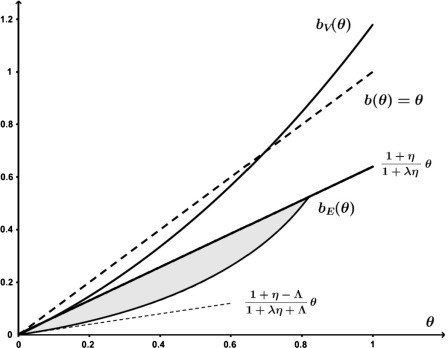
Akbarpour and Li, whose paper won the best-paper award at the Association for Computing Machinery's conference on economics and computation, compared that vulnerability to the "chandelier bids" long permitted at houses like Sotheby's and Christie's, where auctioneers are legally allowed to invent fictitious bids to nudge a live audience upward, as long as those phantom bids stay below a reserve price the seller has already set.
The difference, the researchers argue, is that the traditional auction house format has a built-in check the digital sealed-bid format doesn't. Real bidders are watching in the room, and if an auctioneer leans on chandelier bids too aggressively, buyers notice and walk away, killing the sale. A digital second-price auction running invisibly inside an algorithm has no equivalent audience and no equivalent risk.
"The goal here is to make sure that people think carefully about how to guard the guardians," Akbarpour said.
Li was more direct about what the research implies for formats like Amazon's.
"These two auction formats are not historical accidents," he said, referring to the ascending-price and sealed first-price designs that have survived for centuries. "They are auctions with the self-policing property, which matters for practical purposes."
The paper doesn't mention Amazon. It was describing, in the abstract, the opening that federal and state regulators now say Amazon exploited for seven years in a $200 billion online advertising market that Akbarpour and Li's research places under a cloud of what they call "heated controversy."
A number of ad auction firms, the researchers note, are already experimenting with alternative formats in response to advertiser suspicion. The researchers are careful to say there's no clean fix. A truly tamper-proof auction and a genuinely efficient one may simply be in tension, leaving any designer, in their words, "on the horns of a dilemma."
For the advertisers named in the F.T.C.'s complaint, the dilemma was never theirs to weigh. They were told they were in a fair, second-price fight. Regulators now say Amazon had already decided, years earlier, that fairness was bad for revenue.
Jonathan Platt, Darren Lubetzky, Adam Hersh, Vikram Jagadish, Jason Kornmehl and Ishan Shivakumar, attorneys in the F.T.C.'s Northeast Regional Office, brought the case.
The author is an Executive Director and Head of Research and Analysis at Icarus Asia, a Hong Kong based risk advisory and investment research firm.
Sources
FTC, States Sue Amazon Over Secret Ad Surcharge Scheme, Office of Public Affairs (https://www.ftc.gov/news-events/news/press-releases/2026/08/ftc-states-sue-amazon-over-secret-ad-surcharge-scheme)
Credible Auctions: A Trilemma; Mohammad Akbarpour, Shengwu Li (https://onlinelibrary.wiley.com/doi/abs/10.3982/ECTA15925)