
News · Macro · Global
Rising Prices Are Hitting the Poorest the Most
Global growth is expected to slow this year even as prices are expected to rise. In the median low-income developing country, households at the bottom of the income scale spend about 80 percent of what they consume on food, energy and housing costs.
For information only. Not investment advice. Disclaimer · Special coverage: IMF–World Bank Annual Meetings, Bangkok
AI-generated summary, reviewed by the editor.
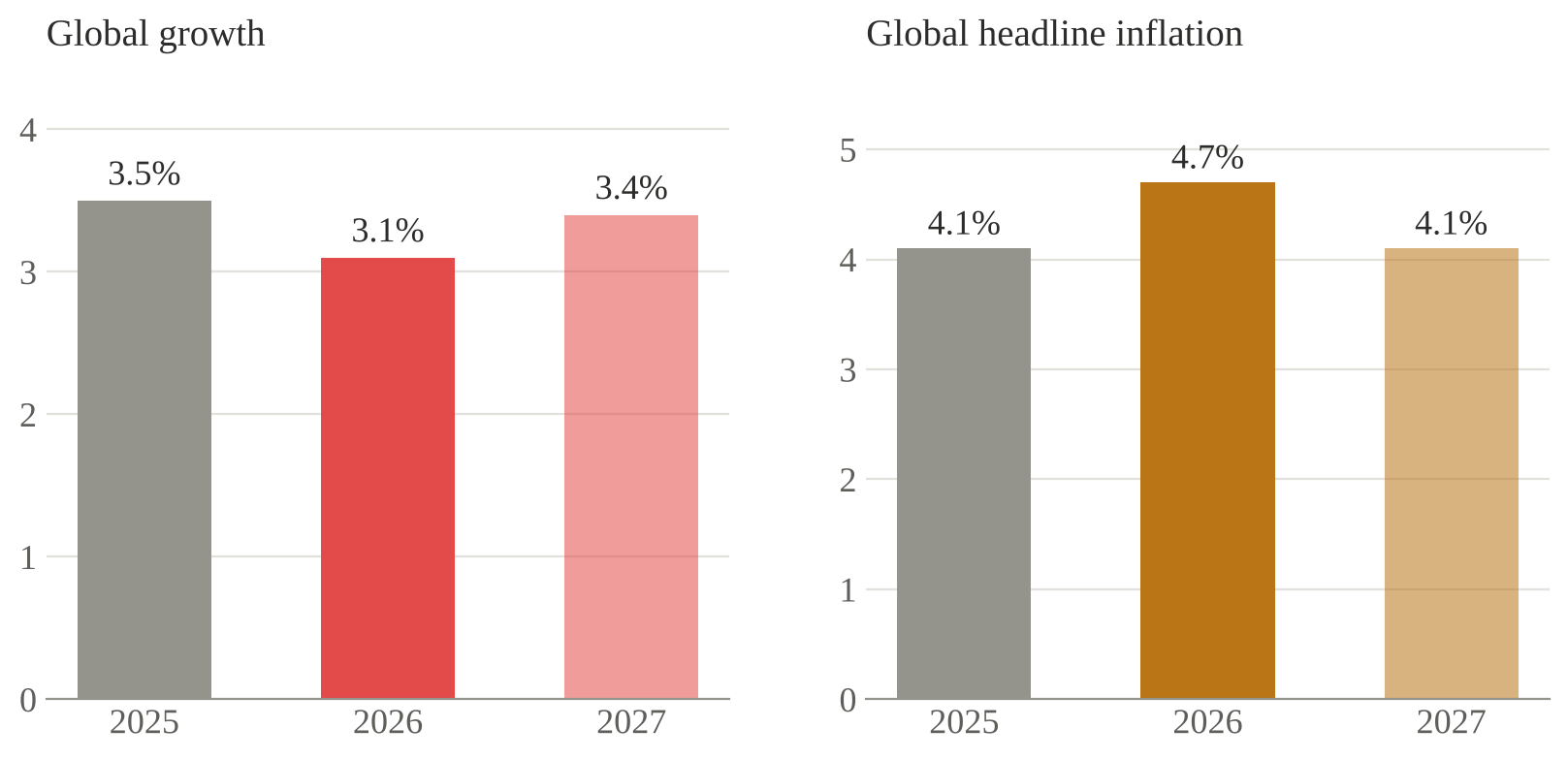
- The IMF projects global growth of 3.1 percent in 2026, below 3.5 percent in 2025, with headline inflation at 4.7 percent, up from 4.1 percent last year.
- The IMF estimates the poorest fifth in the median low-income developing country faced 4.5 percentage points more cumulative inflation than the richest fifth from 2021 to 2024.
- The IMF says targeted transfers protect households at a fraction of the cost of price-suppressing measures, which need 3 to 22 times the fiscal resources.
It restates the article and adds no new facts. How we use AI
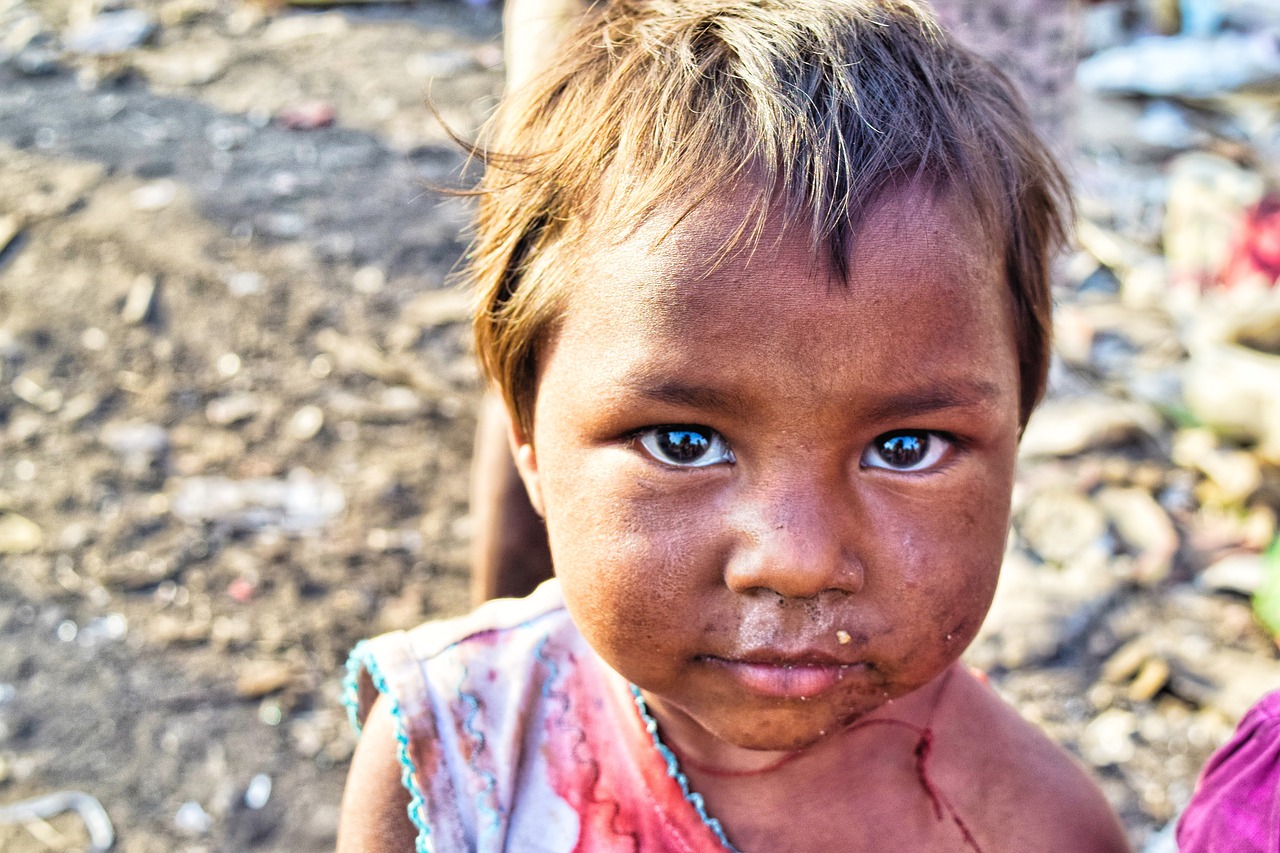
Slowing growth amid rising prices is weighing on the world's poorest households, according to the International Monetary Fund.
Households at the bottom of the income scale in the median low-income developing country spend about 80 percent of what they consume on food, energy and housing costs, according to the International Monetary Fund. There is little left to give up. In the fund's model of such an economy, a global food-price shock of about 45 percent lifts domestic food prices roughly 20 percent and, with no government response, cuts consumption by about 7.5 percent.
The fund's October World Economic Outlook, titled "Resilience Under Strain, Urgent Choices," was released Tuesday morning in Bangkok at the annual meetings of the I.M.F. and the World Bank. It projects global growth at 3.1 percent this year, up from the 3.0 percent the fund forecast in July, according to the A.P. But that is below the 3.5 percent the world economy posted in 2025.
The less comfortable number is inflation.
The fund expects global headline inflation of 4.7 percent in 2026, up from 4.1 percent last year, easing to 4.1 percent in 2027. Core inflation, which strips out food and energy, is "proving sticky," according to IndexBox's summary of the report, and the fund does not expect it to return to 2 percent in the United States and Europe until mid-2028.
The report tells two stories.
The first is an economy that, the fund said, "weathered the energy shock caused by the war in the Middle East better than feared," according to The Edge Malaysia. The second is what that price shock does to households that have little room to absorb it.
The shock itself is the Iran war.
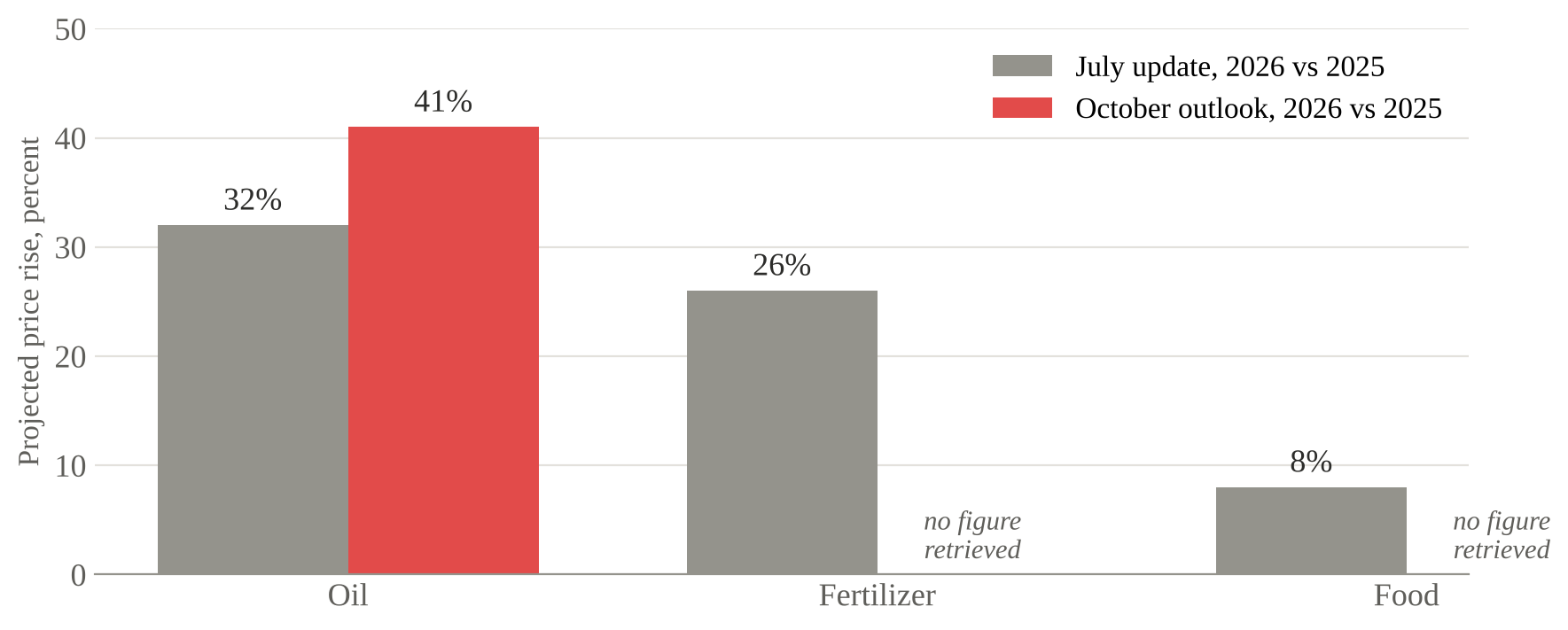
Oil prices are up nearly 41 percent this year, averaging $96 a barrel, the A.P. reported, and the fund's forecast assumes shipments of oil and gas through the Strait of Hormuz resume by March.
The war's course after the U.S. midterm elections is uncertain. President Trump has said it would be "possible" to ramp up bombing after the elections but declined to elaborate, Al Jazeera reported on October 9.
In July, the fund's baseline had put the 2026 oil price at $89 a barrel, 32 percent above 2025, according to BusinessDay of Nigeria, which cited that update. It projected fertilizer prices up 26 percent and food prices up 8 percent.
"The outlook is highly uneven," Silvana Tenreyro, the director of the fund's research department, said, according to the A.P. Ms. Tenreyro said that without measures such as rerouting energy supplies, drawing down inventories and improving energy efficiency, 2026 growth would have been 60 basis points lower, at 2.5 percent, the News Agency of Nigeria reported. She also warned that the inventory buffers and efficiency gains are nearing their limits. "The task ahead is to move from coping to rebuilding, restoring fiscal space and supply-side resilience," she said, as quoted by the News Agency of Nigeria.
The cushion has been uneven, too.
Energy exporters outside the conflict zone and economies tied to the artificial-intelligence investment cycle are expected to do better, according to the News Agency of Nigeria's account of the briefing. "Energy importers and countries with limited participation in the technology boom face weaker growth prospects," Ms. Tenreyro said. "Many low-income countries and fragile states belong to the latter group."
The figures follow that split.
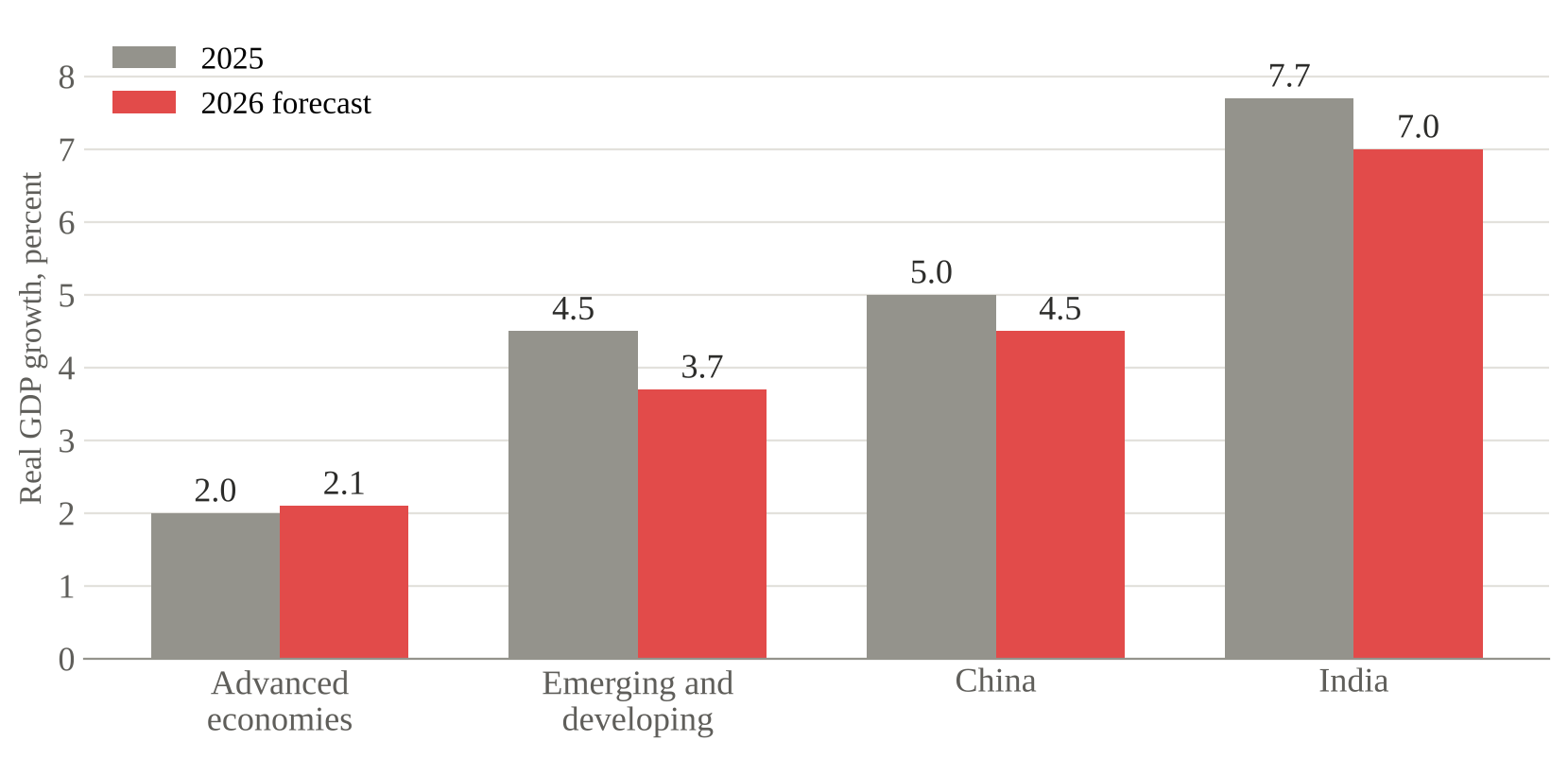
Advanced economies are projected to grow 2.1 percent this year, against 2.0 percent in 2025. Emerging market and developing economies are projected at 3.7 percent, down from 4.5 percent, before recovering to 4.4 percent in 2027, the A.P. reported. China is forecast at 4.5 percent, down from 5 percent, and India at 7 percent, down from 7.7 percent. The United States holds at 2.3 percent in both 2026 and 2027, and the euro area is projected at 1.1 percent this year and 1.2 percent next. The Middle East and Central Asia are forecast to contract in 2026 before growing 6.3 percent in 2027.
The report also points to how narrow the expansion has become.
Thirty-two countries now account for 95 percent of global growth, the A.P. reported, down from 54 countries in April. The United States and China together account for more than three-quarters of net demand for A.I.-related chip imports, and the fund's forecast assumes that demand moderates. The fund says the A.I. investment boom "is contributing to inflation and risks financial fragility," according to IndexBox.
Kristalina Georgieva, the fund's managing director, called A.I. "a slow moving tsunami, but tsunami nonetheless," with about 40 percent of jobs worldwide expected to be affected, the A.P. reported.
For people who buy groceries rather than chips (not of the eating variety), the most useful chapter may be the "Navigating a Shock-Prone World: Lessons from Cost-of-Living Crises" one.
The fund's economists defined a cost-of-living crisis as a period in which the prices of basic necessities, meaning food, transport and housing costs such as utilities, rise sharply and quickly, outpacing both other prices and nominal wages.
They then went looking for them.
Across 85 economies from 2005 to 2025, 75 had at least one such crisis. Forty-six percent had at least two. The episodes cluster around 2007-08, 2022-23 and, less sharply, 2010-11. In a median advanced economy, a global factor explains about 70 percent of necessity inflation during a crisis. A commodity price index explains roughly half of the variation in that global factor.
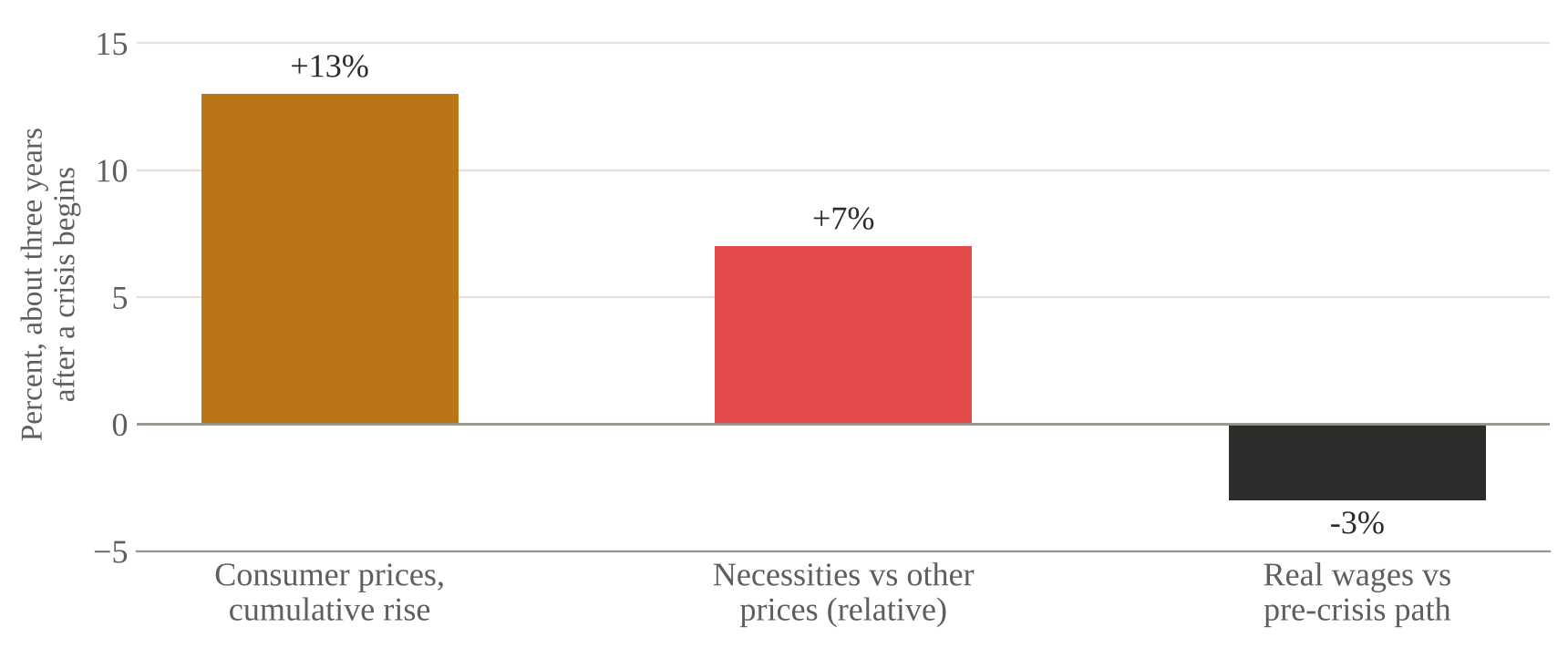
The chapter's central finding is how long the damage lasts. Three years after a crisis begins, prices of necessities remain about 7 percent above other prices. Consumer prices have risen about 13 percent cumulatively. Real wages are still about 3 percent below where they were headed before the crisis.
Expectations move too.
One year ahead, inflation expectations are about 2.7 percentage points higher in advanced economies and 5.3 points higher in emerging and developing economies four quarters after a crisis begins. Five-year-ahead expectations are still about 0.3 points higher in advanced economies and 1.1 points higher in emerging and developing economies three years on. Elevated expectations of this kind could lead to interest rate increases, Reuters reported. Domestic demand takes a hit as well, falling about 6 percent in emerging and developing economies the following year and about 8 percent in net energy importers, while advanced economies are broadly resilient.
The chapter's second finding is who pays.
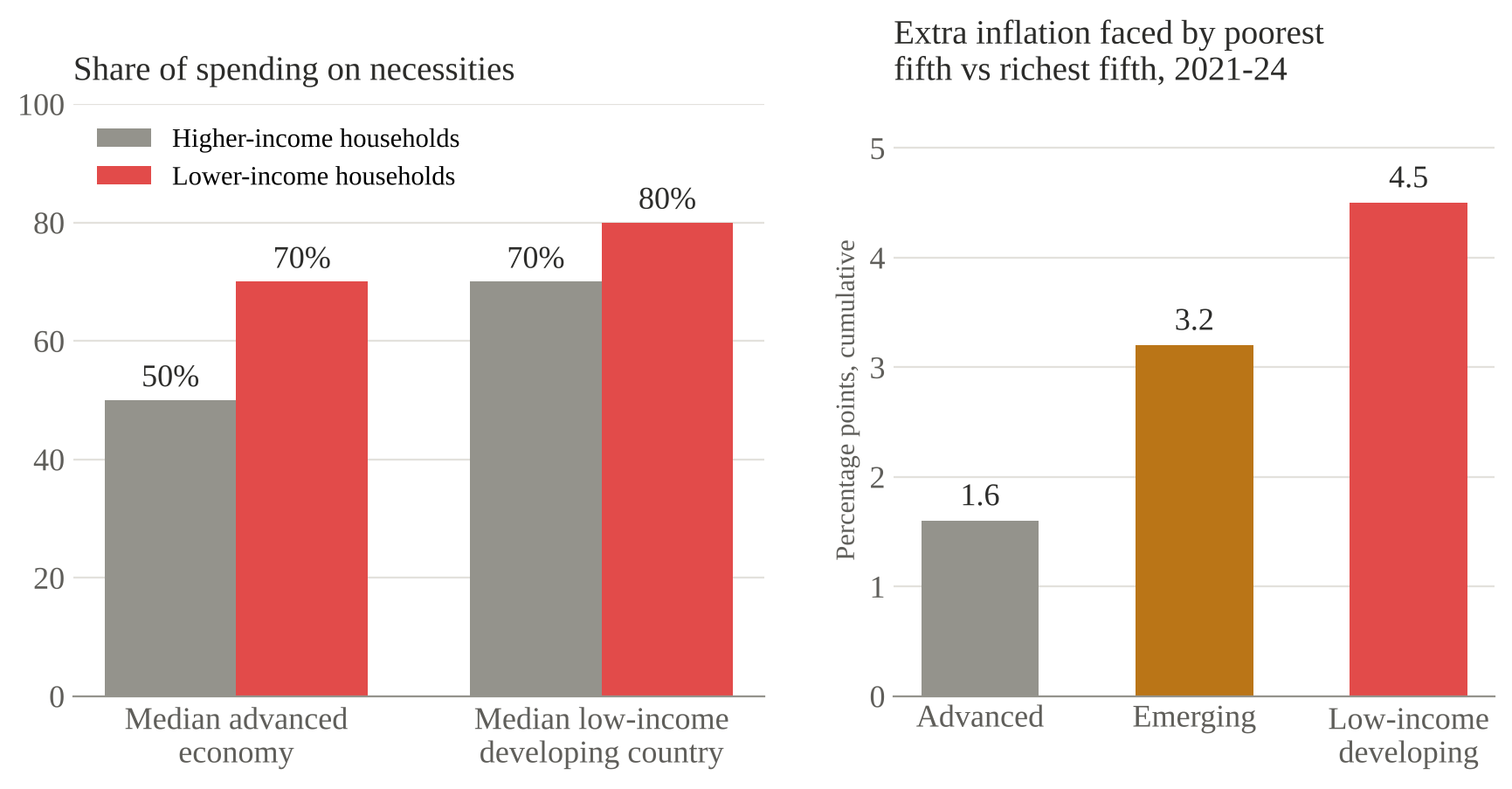
Households keep buying necessities as their prices rise, and necessities take up a large share of the budget. In the median advanced economy they account for about 50 percent of consumption for high-income households and 70 percent for low-income ones. In the median low-income developing country the shares are about 70 percent and 80 percent.
The official inflation rate averages those households together. The fund's economists rebuilt it by income. From 2021 to 2024, the poorest fifth of households faced 1.6 percentage points more cumulative inflation than the richest fifth in the median advanced economy, 3.2 points more in the median emerging economy and 4.5 points more in the median low-income developing country.
The gap changes the poverty count. Using inflation rates specific to low-income households instead of the aggregate, the extreme poverty rate in 2024 is about 0.8 percentage points higher. That is roughly 23 million more people below the extreme poverty line from 2021 to 2024 than previously calculated, Reuters reported.
"These crises reduce living standards and they worsen inequality," Chiara Maggi, an I.M.F. economist who co-led the research, told Reuters.
Shantayanan Devarajan, a Georgetown University professor and former World Bank economist, told Reuters that growth in low-income countries was at an all-time low. In a July update, the fund had warned that rising food and energy costs could heighten the risk of social unrest and political instability, particularly in vulnerable economies or those with upcoming elections, BusinessDay reported.
Then there is the question of what governments should do about it, where the chapter is most direct. Governments reached for different tools in different places.
Advanced economies relied on income support for about 60 percent of their interventions, the chapter says, while low-income countries leaned more on measures that suppress prices. After four quarters, income support cushioned consumption with no detectable effect on inflation, expectations or the fiscal balance. Price-suppression measures lowered near-term necessity inflation, but they had no detectable effect on consumption and worsened the fiscal balance.
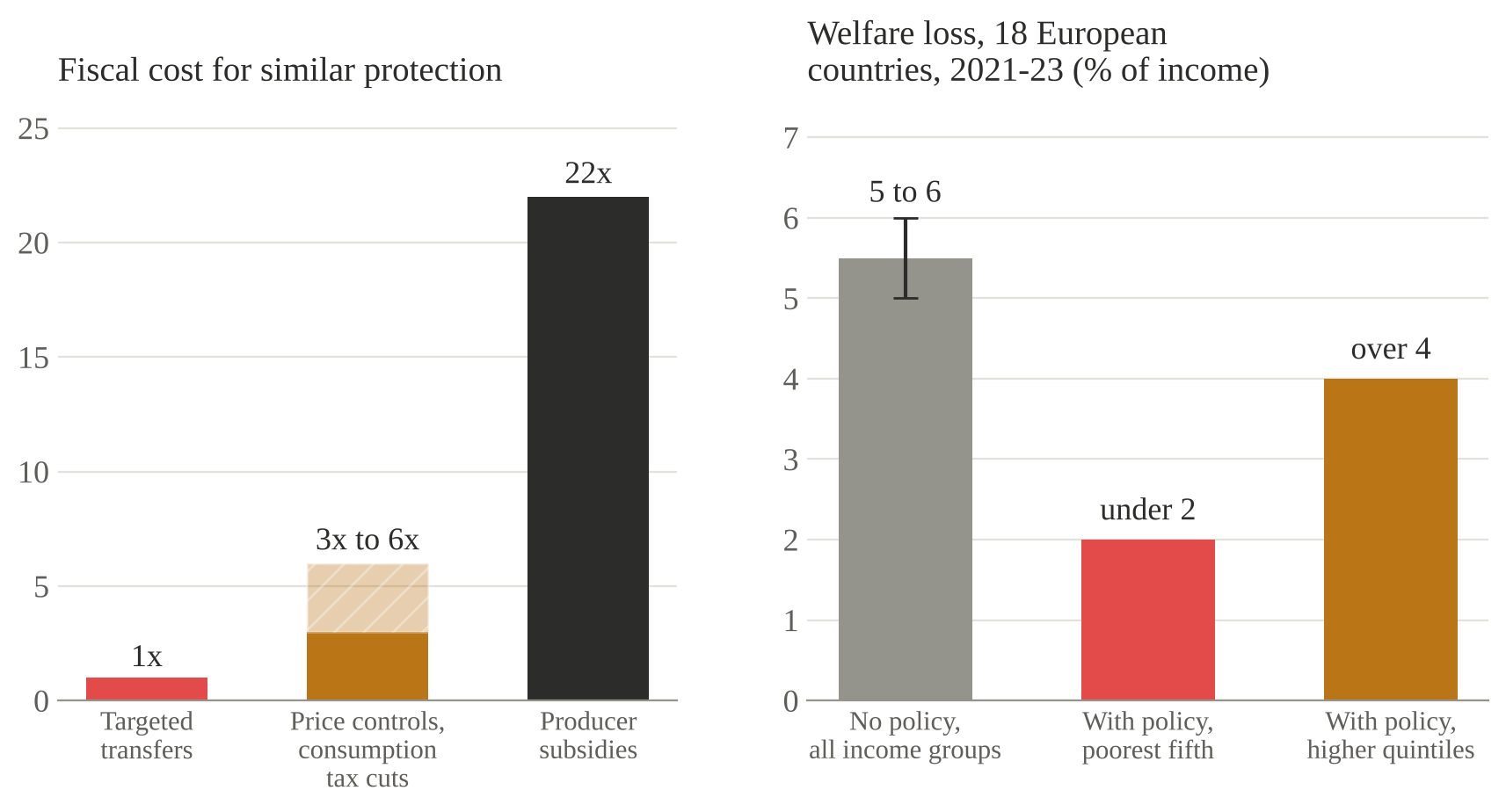
In the fund's model, comparable protection through price-suppressing measures takes 3 to 22 times the fiscal resources of targeted transfers, depending on the country and the shock. Reuters put the multiples at three to six times for price controls and lower consumption taxes, and 22 times for producer subsidies. In a low-income economy facing a short food shock, consumer subsidies cut the inflation surge by about 4 percentage points but raise debt by about 7.5 percent of gross domestic product. Targeted transfers achieve similar protection at about one-sixth of the cost.
The European record offers a test.
In 18 countries from 2021 to 2023, the fund estimates, welfare losses without policy would have run 5 to 6 percent of income for every income group. With policy, losses fell to under 2 percent for the poorest fifth and stayed above 4 percent for higher quintiles. Targeted transfers reached lower-income households in full. Price measures on electricity, gas and gasoline delivered less than 20 cents per euro to lower-income households. For gasoline, the richest fifth received about 40 cents per euro.
The recommendations follow from that.
The first line of defense, the chapter says, is monetary policy aimed at low and stable inflation, together with social protection systems that let automatic stabilizers work. When intervention is needed, governments should preserve price signals and prioritize temporary income support for the most vulnerable, ideally through existing programs that can scale up quickly. Broad measures belong only to exceptionally severe shocks and when budgets allow. All interventions should be temporary, with clear sunset clauses.
The model also tests what happens when governments subsidize in unison. If many countries subsidize at once, global food prices rise about 25 percentage points more, and domestic food prices in low-income countries rise almost 5 points more. Mr. Devarajan told Reuters that Egypt and Indonesia have been shifting from broad subsidies toward targeted cash transfers.
At the Bangkok news conference, the fund's advice reached individual governments. Deniz Igan, a division chief in the fund's research department, said the fund urged Nigeria to strengthen targeted cash transfers to vulnerable households amid rising food and energy prices, according to P.M. News Nigeria. Igan said temporary income support should be accompanied by improved public spending and stronger revenue collection.
The host country is watching its own consumers.
Thailand's Trade Policy and Strategy Office, which surveyed 5,424 people nationwide, found its consumer confidence index at 48.9 in September, down from 49.5 in August and below its threshold of 50, according to The Nation Thailand. The office cited political uncertainty and risks facing the global economy.
Ms. Tenreyro told reporters that global resilience is "approaching its limits," according to P.M. News.
Her advice to governments, as the News Agency of Nigeria reported it, was to rebuild fiscal buffers and strengthen supply chains, especially in energy. Chapter 2 adds the instruction for the next price spike: send money to the people who need it, and let prices do their work for everyone else.
The chapter also makes a forecast of its own. "Sharp spikes in food and energy prices will likely become more common," it says.
Sources
- Al Jazeera. "Is Trump signalling a return to war with Iran after the midterms?" October 9, 2026. https://www.aljazeera.com/news/2026/10/9/is-trump-signalling-a-return-to-war-with-iran-after-the-midterms
- Associated Press. "IMF raises its forecast for world growth this year but says economies will slow in 2027." ABC News, October 2026. https://abcnews.com/Business/wireStory/imf-raises-forecast-world-growth-year-economies-slow-137214412
- BusinessDay (Nigeria). "Nigeria's growth outlook holds but poverty risks mount as global inflation stalls: IMF." July 9, 2026 (citing IMF July 2026 WEO Update). https://businessday.ng/uncategorized/article/nigerias-growth-outlook-holds-but-poverty-risks-mount-as-global-inflation-stalls-imf/
- Gulf News. "IMF warns world economy nears limits of its resilience." October 2026. https://gulfnews.com/business/economy/imf-warns-world-economy-nears-limits-of-its-resilience-1.500708527
- International Monetary Fund. "World Economic Outlook, October 2026: Resilience Under Strain, Urgent Choices" (publication page). October 13, 2026. https://www.imf.org/en/publications/weo/issues/2026/10/13/world-economic-outlook-october-2026
- International Monetary Fund. "Chapter 2: Navigating a Shock-Prone World: Lessons from Cost-of-Living Crises." World Economic Outlook, October 2026. https://www.imf.org/-/media/files/publications/weo/2026/october/english/ch2.pdf
- IndexBox. "IMF: Global Growth to Slow in 2026, Rebound in 2027 as Iran Conflict Lifts Inflation." October 2026. https://www.indexbox.io/blog/imf-global-growth-to-slow-in-2026-rebound-in-2027-as-iran-conflict-lifts-inflation/
- News Agency of Nigeria. "Global Economic Resilience Under Strain, Says IMF." October 2026. https://nannews.ng/global-economic-resilience-under-strain-says-imf/
- P.M. News (Nigeria). "Rising food prices: IMF urges Nigeria to increase support for poor households." October 13, 2026. https://pmnewsnigeria.com/2026/10/13/rising-food-prices-imf-urges-nigeria-to-increase-support-for-poor-households/
- Shalal, Andrea (Reuters). "Cost-of-living crises have lasting impact on inflation expectations, poverty, IMF says." Reuters, via Investing.com, October 6, 2026. https://www.investing.com/news/economy-news/costofliving-crises-have-lasting-impact-on-inflation-expectations-poverty-imf-says-4934617
- The Edge Malaysia. "Thursday 08 Oct 2026" (IMF cost-of-living research coverage, dated October 6, 2026). https://theedgemalaysia.com/node/820796
- The Nation Thailand. "IMF says targeted aid shields vulnerable households at lower cost." October 12, 2026. https://www.nationthailand.com/business/economy/40072136
Comments
Sign in with LinkedIn to join the discussion. Your LinkedIn name and photo appear publicly beside your comment. Please keep it civil and on topic.