
News · Rates & FX · US
Markets Aren't Buying Scott "I am the House Now" Bessent's Rhetoric
The Treasury Secretary's buyback program was sold as a way to help the bond market work better. Investors read it as an attempt to cap borrowing costs, and the market has spent a month pushing back.
For information only. Not investment advice. Disclaimer
AI-generated summary, reviewed by the editor.
- Treasury bought back $5.187 billion of bonds on Sept. 10, yet the 10-year yield touched 5.364 percent on Oct. 7, a 24-year high, Reuters reported.
- The author argues buybacks cannot set prices in a $32 trillion market; Insight Investment put each at under 0.1 percent of the longer-dated market it targets.
- An unreviewed Congressional Budget Office working paper says projected duration supply could raise the 10-year term premium about 50 basis points; the Fed lifted rates in September.
It restates the article and adds no new facts. How we use AI
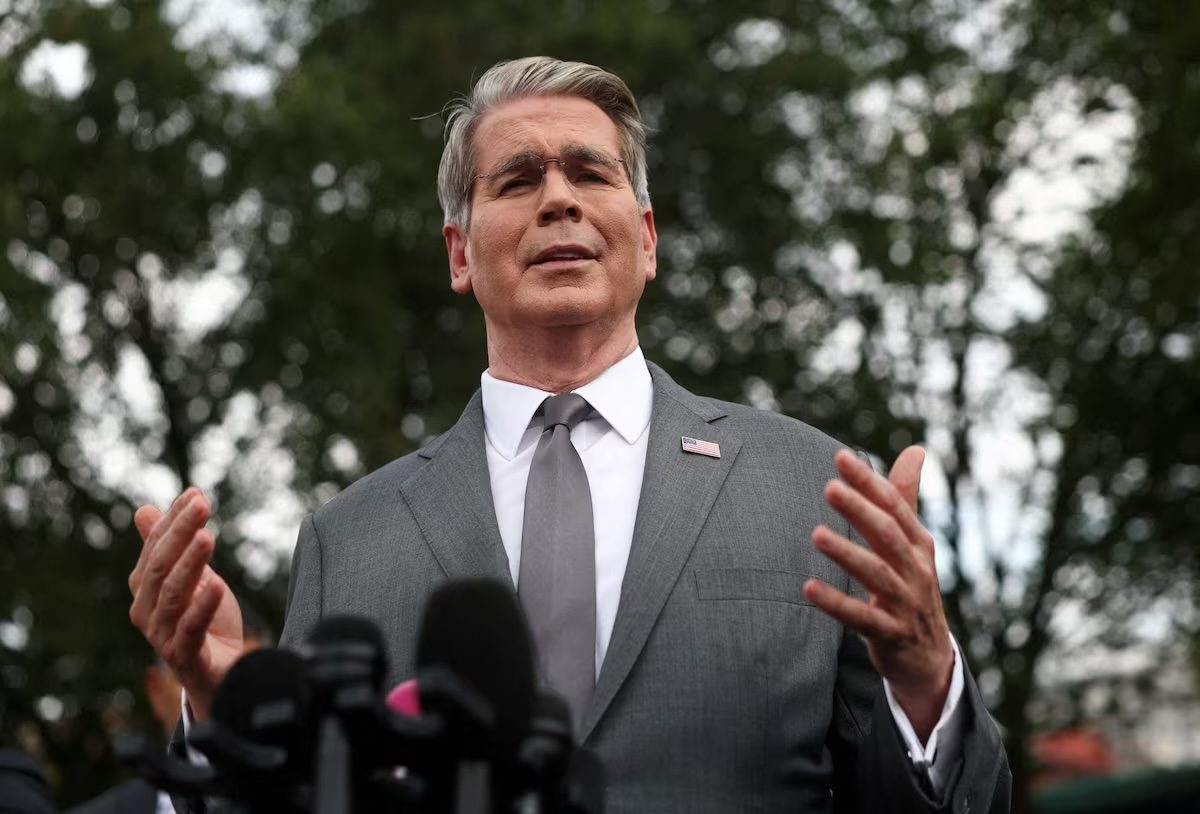
On Sept. 10, the United States government went shopping for its own debt. The Treasury Department offered to buy back up to $6 billion of bonds maturing in 10 to 20 years, and by the end of the operation it had taken in $5.187 billion.
The day before, Treasury had said it would buy $6 billion per operation in long-term bonds this quarter, triple its original plan. Traders took it as a signal that Treasury Secretary Scott Bessent wanted long-term interest rates lower. They sold anyway. The 10-year yield briefly spiked to 4.85 percent, its highest since October 2023, according to reporting by Axios.
It kept going. On Oct. 5, the 30-year yield reached 5.70 percent, its highest since 2002, Moneywise reported. Two days later the 10-year touched 5.364 percent, a 24-year high, according to Reuters.
The buybacks are not broken. They do what Treasury says they do, which is give investors a regular buyer for older, harder-to-trade bonds.
What they cannot do is set the price of long-term money in a $32 trillion market, and the difference between those two jobs is where the trouble started. The forces lifting yields (a Federal Reserve that is raising rates again, deficits that keep growing and a pool of buyers who now want more pay to hold long bonds) are each far larger than anything the Treasury can buy.
"If (the) Treasury really wants to make a difference," Ira Jersey, a rates strategist at Bloomberg Intelligence, told Axios, "they'll need to really shock and awe the next size announcement, maybe $10 billion or more per operation."
A Drop in the Ocean?
Mr. Bessent's program started as plumbing.
On Aug. 19, Treasury said it would raise the maximum size of its buybacks in the 10-to-20-year and 20-to-30-year sectors from $2 billion to at least $4 billion per operation, effective Sept. 9. The stated reason was "consistent strong sponsorship from market participants," meaning plenty of investors wanted to sell.
Daily closing yields on 10-year and 30-year Treasuries, %. Treasury announced larger long-end buybacks on Aug. 19; the 10-year has risen 63 basis points since.
The release did not mention yields. Neither did Francis Brooke, the deputy Treasury secretary, when he described the program at a Treasury market conference hosted by the Federal Reserve Bank of New York on Sept. 22. Treasury had bought back "nearly $500 billion of Treasury securities over the course of more than 150 operations" in the past two and a half years, he said, and about $300 billion of that was in securities with less than two years left to run. He called the two halves of the program "liquidity support and cash management."
That history is indicative of what the tool was built for.
Its August refunding statement set this quarter's ceiling at $38 billion of older bonds bought for liquidity support, spread across maturities, plus $25 billion in the one-month-to-two-year bucket for cash management.
Set against the long-bond market, each operation is close to a rounding error. Insight Investment, part of BNY, citing Bloomberg data, put each buyback at less than 0.1 percent of the longer-dated market it targets.
The money also has to come from somewhere. Treasury cannot create money the way the Fed can.
As Axios noted, it pays for buybacks either by drawing down its cash account at the Fed or by selling short-term debt. Selling bills to retire bonds shortens the government's debt profile. It does not shrink it.
That separates it from the Fed's Operation Twist, the 1961 program Mr. Bessent's effort is often compared with.
The Fed could swap assets on its own balance sheet. Even so, economists Titan Alon and Eric Swanson estimated in a 2011 San Francisco Fed paper that the original Twist lowered long-term yields by about 15 basis points, an effect they called highly significant statistically but moderate.
Strategists said as much in September.
Guneet Dhingra, head of U.S. rates strategy at BNP Paribas Asset Management, called the operations "a mere 'Band-Aid' solution that fails to address the much deeper, structural deficit wound," Axios reported. Adam Josephson of Sakonnet Research had a much blunter assessment. "Perhaps cutting the budget deficit might help more than tactics such as these."
Enter The Fed
Six days after the first big buyback, the Fed raised rates.
On Sept. 16, the Federal Open Market Committee, led by Kevin Warsh, voted 12 to 0 to lift its benchmark rate by a quarter point to a range of 3.75 to 4 percent. "Inflation remains elevated," the statement said.
Consumer prices rose 3.4 percent in the year through August, according to the Bureau of Labor Statistics. Energy prices were up 16.3 percent. Strip out food and energy and the increase was 2.4 percent.
A central bank fighting inflation is not going to buy long bonds to help Treasury.
The Fed's own purchases are limited. Its implementation note directs the New York Fed's trading desk to buy Treasury bills and, if needed, other Treasuries with maturities of "three years or less" to keep bank reserves ample. That is short paper, not the 10- and 30-year bonds Mr. Bessent is trying to support.
The San Francisco Fed's yield model shows what the rate increase did.
It splits the 10-year yield into two parts. What investors expect short-term rates to average over the decade, and a term premium, the extra pay investors demand to lock up money for that long. On Oct. 6, the model put the 10-year yield at 5.27 percent, with 3.8 points from expected short rates and 1.47 points of term premium. A year earlier the split was 3.08 and 1.16, for a yield of 4.24 percent.
Both parts went up. And the expected-rate part, which the Treasury has no way to touch, rose more than twice as much.
The Deficit Math
Buybacks can only work on the term premium, and the term premium is where the budget shows up.
The Congressional Budget Office projected in February that the federal deficit would reach $1.9 trillion in the 2026 fiscal year and $3.1 trillion in 2036. Debt held by the public climbs from 99 percent of gross domestic product at the end of 2025 to 120 percent in 2036. Interest costs more than double, from $1.0 trillion to $2.1 trillion a year.
A working paper published by the budget office this month tries to put a number on what that means for bonds.
Its author, Michael McGrane, estimates that a 5-percentage-point increase in the supply of Treasury duration, roughly what comes with a 1-point rise in debt to G.D.P., adds 2.8 basis points to the 10-year term premium. Over the next decade, he wrote, the projected increase in duration supply "could raise the 10-year term premium by about 50 basis points." The paper carries the usual caveat that it has not been through the budget office's regular review and does not represent an official view.
Over the next decade, he wrote, the projected increase in duration supply "could raise the 10-year term premium by about 50 basis points."
Investors are also looking ahead to future bond sales.
At Treasury's borrowing advisory committee meeting on Aug. 4, the median primary dealer forecast implied "a $1.45 trillion funding shortfall in FY2027-28" at current auction sizes. Dealers generally expect the Treasury to start selling more long-term debt sometime in 2027. Treasury has said it plans to hold coupon auction sizes steady "for at least the next several quarters." The market is pricing what comes after that.
"It's like (the) Treasury created this monster that it now has to keep feeding," Steven Zeng, a strategist at Deutsche Bank, told Bloomberg.
The Buyers in the Room
The buyers have changed too.
Foreigners held about $9.2 trillion of Treasuries at the end of 2025, or 31 percent of publicly held debt, according to State Street Global Advisors-LA. But private investors now account for 58.1 percent of that foreign total, and "foreign official demand is no longer growing at the same pace as Treasury supply," State Street wrote. Central banks and reserve managers, who tend to buy with less regard to price, are a shrinking share.
The investors replacing them care about price.
Daniel Beltran and Canlin Li, economists at the Fed, found in a September paper that the Treasury market "has become increasingly price-sensitive over time," as foreign official holders gave way to hedge funds and other private buyers. By their estimate, another $100 billion of Treasury supply now raises five-year yields by about 3 basis points.
By their estimate, another $100 billion of Treasury supply now raises five-year yields by about 3 basis points.
Hedge funds are a big part of that shift.
A Fed note by Phillip Monin estimated their gross Treasury exposure at about $4 trillion as of September 2025, roughly double the 2023 level, including about $830 billion in the so-called basis trade, a leveraged bet on the gap between cash bonds and futures. The trade runs on cheap short-term financing. When that dried up in March 2020, the funds dumped Treasuries in a hurry.
Other borrowers are competing for the same long-term money.
Technology companies building data centers for artificial intelligence have sold $157 billion of dollar debt this year, compared with $93 billion in 2025, according to Insight Investment, which said corporate issuance of 30-year-plus bonds was on track to outpace 30-year Treasury sales for the first time since the pandemic.
And the selling is not only American.
The 10-year Treasury yield rose 87.1 basis points in the third quarter, its sharpest quarterly increase since 1994, according to LSEG data cited by Reuters. Japanese government bond yields posted a fifth straight quarter of double-digit gains, and European bond markets were under pressure too, Reuters reported.
"It was the Treasury bear market that had to happen," Andrew Lilley, chief rates strategist at Barrenjoey, told Reuters on Oct. 1.
Fed economists Daniel Covitz and Eric Engstrom made a related point in February.
They traced the rise in far-forward Treasury rates to "heightened perceived risks of future adverse economic supply shocks" and "increased concerns about future federal deficits," and found "no evidence that an increase in far-ahead inflation risk has played a role." Investors still trust the Fed on inflation over the long run, in other words. They want to be paid for everything else.
Investors still trust the Fed on inflation over the long run, in other words. They want to be paid for everything else.
Demand, But at What Cost?
None of this means nobody wants Treasuries.
On Oct. 7, Treasury sold $39 billion of 10-year notes at 5.3 percent. Bids totaled 2.77 times the amount on offer, above the average of 2.54 for the previous six sales, and primary dealers, the banks required to bid, were left holding just 2.5 percent, their smallest share since the aftermath of the 2008 financial crisis, Reuters reported.
"It was a good auction given how much the 10-year has sold off, and it's good to see buyers step in," said Vinny Bleau, director of fixed-income research at Raymond James. Gennadiy Goldberg, head of U.S. rates strategy at TD Securities, said "we think higher yields are prompting investors to dip their toes."
The buyers are there. But they also want the U.S. government to pay them 5.3 percent a year for that privilege.
The Options on the Table
Washington has other levers, and each has a price.
Treasury could shift more borrowing into bills, which would cut the supply of long bonds but leave the government refinancing more debt every few months at whatever rate the Fed sets. It could shrink coupon auctions, but the dealers' $1.45 trillion forecast says that only delays the reckoning.
The Fed could buy long bonds again, or go further and cap yields outright. The United States tried that once.
From 1942 to 1951 the Fed pinned Treasury bill rates at three-eighths of a percent and capped long-term yields at 2.5 percent to help finance the war, according to a 2021 history by Jonathan Rose of the Chicago Fed. It took the Treasury-Fed Accord of 1951 to restore the central bank's ability to set policy on its own. Doing it now, with inflation at 3.4 percent, would run straight against the rate increase the Fed made in September.
That leaves the budget, which is controlled by Congress and the White House, not by Treasury's debt managers.
Mr. Bessent has not backed off. He told Axios that "everyone in the market knows you don't win every hand, but you win over time," according to an account of the interview published by Moneywise. He also said: "I can't control the bond market. What I can do is try to get people to slow down and think."
Treasury has said it will announce future buyback sizes at its next quarterly refunding, on Nov. 4.
The problem with playing Russian Roulette is that you only have to be wrong once.
Sources
- Alon, Titan, and Eric Swanson. "Operation Twist and the Effect of Large-Scale Asset Purchases." FRBSF Economic Letter, Federal Reserve Bank of San Francisco, April 25, 2011.
- Beltran, Daniel, and Canlin Li. "Estimating Yield Impacts of Treasury Demand and Supply Changes." International Finance Discussion Papers No. 1447, Board of Governors of the Federal Reserve System, September 18, 2026.
- Board of Governors of the Federal Reserve System. "Federal Reserve Issues FOMC Statement." September 16, 2026.
- Board of Governors of the Federal Reserve System. "Implementation Note Issued September 16, 2026."
- Brooke, Francis. "Remarks by Deputy Secretary of the Treasury Francis Brooke." U.S. Department of the Treasury, September 22, 2026.
- Bureau of Labor Statistics. "Consumer Price Index — August 2026." September 11, 2026.
- Chavez-Dreyfuss, Gertrude. "US Bonds Selloff Eases, Yields off Highs, After Strong 10-Year Note Auction." Reuters (via Virginia Business), October 7, 2026.
- Covitz, Daniel, and Eric Engstrom. "Why Have Far-Forward Nominal Treasury Rates Increased So Much in the Past Few Years?" FEDS Notes, Board of Governors of the Federal Reserve System, February 12, 2026.
- Federal Reserve Bank of San Francisco. "Treasury Yield Premiums." Data accessed October 8, 2026 (observation dated October 6, 2026).
- Insight Investment (BNY). "Higher Treasury Yields May Present Opportunities." September 9, 2026.
- McGrane, Michael. "Treasury Duration Supply and Term Premiums." Congressional Budget Office Working Paper 2026-11, October 2026.
- Mola, Selam. "What Shifting Treasury Demand Means Now." Mind on the Market, State Street Global Advisors, October 4, 2026.
- Monin, Phillip J. "Decomposing Hedge Funds' U.S. Treasury Exposures." FEDS Notes, Board of Governors of the Federal Reserve System, June 22, 2026.
- Phillips, Matt. "Bessent Fails to Shock and Awe the Bond Market." Axios, September 10, 2026.
- Rose, Jonathan. "Yield Curve Control in the United States, 1942 to 1951." Economic Perspectives No. 2, Federal Reserve Bank of Chicago, October 2021.
- Smith, Brian. "Quarterly Refunding Statement of Deputy Assistant Secretary for Federal Finance Brian Smith." U.S. Department of the Treasury, August 5, 2026.
- Swagel, Phillip L. "Director's Statement on the Budget and Economic Outlook for 2026 to 2036." Congressional Budget Office, February 11, 2026.
- TDG Syndication. "US Treasury Says Bought $5.187 Billion in 10 to 20 Year Liquidity Buyback Operation on September 10." The Daily Guardian, September 10, 2026.
- Treasury Borrowing Advisory Committee. "Minutes of the Meeting of the Treasury Borrowing Advisory Committee, August 4, 2026." U.S. Department of the Treasury, August 5, 2026.
- U.S. Department of the Treasury. "Treasury Announces Increased Sizes of Nominal Long-End Liquidity Support Buybacks." August 19, 2026.
- Westbrook, Tom. "Bonds Teeter After US Treasuries' Worst Quarter Since 1994." Reuters (via Hargreaves Lansdown), October 1, 2026.
- Zeballos-Roig, Joseph. "Scott Bessent Dismisses Bond Market Backlash as 10-Year and 30-Year Treasury Yields Hit Highest Levels Since 2002." Moneywise (via Yahoo Finance), October 6, 2026.
Comments
Sign in with LinkedIn to join the discussion. Your LinkedIn name and photo appear publicly beside your comment. Please keep it civil and on topic.