
News · Macro · Global, China
Chip Boom Helps APEC Growth Forecast, but Oil Clouds 2027
A.I. spending pushed the 2026 outlook for the region to 3.4 percent but the forum's own economists say costlier energy and rising prices coupled with heavy public debt will slow growth next year.
For information only. Not investment advice. Disclaimer
AI-generated summary, reviewed by the editor.
- APEC's research arm forecasts growth of 3.4 percent in 2026 for its 21 member economies, up from 3.2 percent in August, and 3.1 percent in 2027.
- Semiconductor and metals purchases for A.I. systems lifted the value of APEC merchandise exports 22.5 percent in the first half of 2026, against 6.5 percent a year earlier.
- The report lists higher energy costs, geopolitical tensions, trade restrictions and tighter financial conditions as headwinds, and projects 2026 inflation of 3.2 percent.
It restates the article and adds no new facts. How we use AI
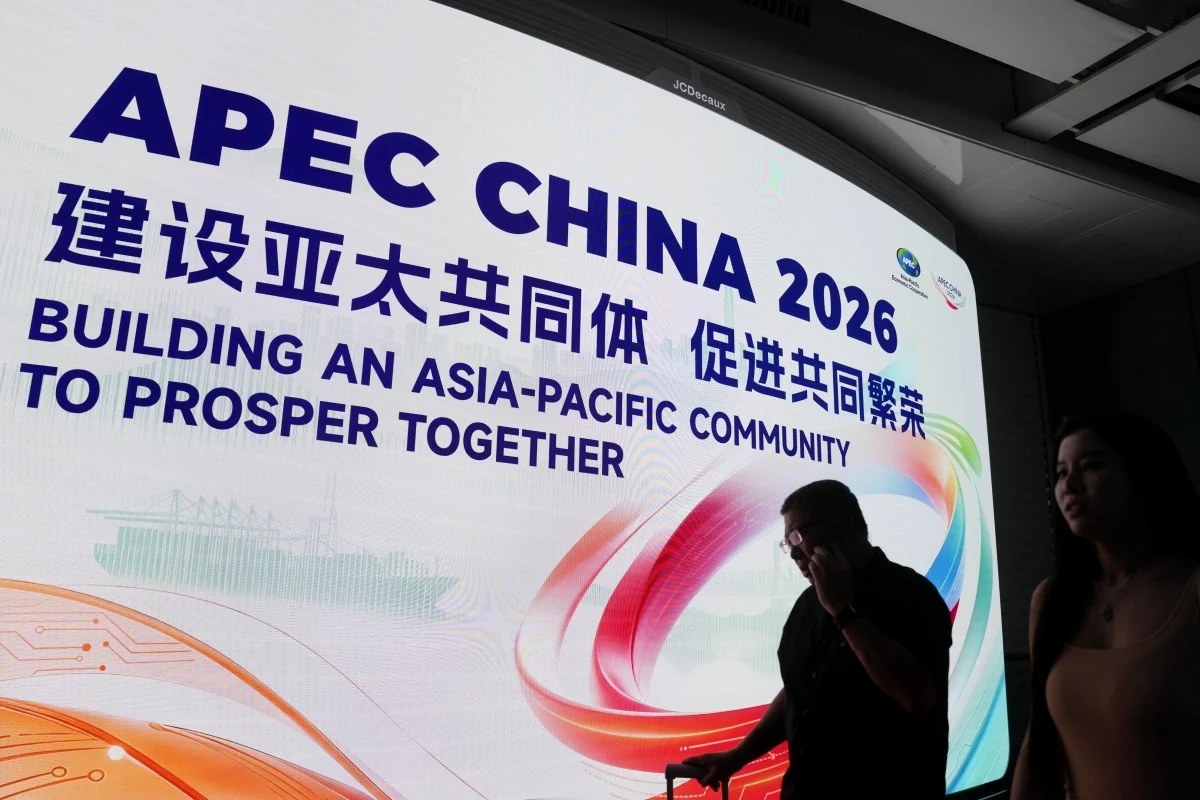
Asia-Pacific economies will grow 3.4 percent this year, beating forecasts, as an artificial intelligence boom lifts trade, but their forecasters expect a slowdown in 2027.
The research arm of the Asia-Pacific Economic Cooperation forum, or APEC, said on Sunday that its 21 member economies would expand 3.4 percent in 2026, up from the 3.2 percent it projected in August. Companies racing to build A.I. systems drove the upgrade by buying semiconductors and the metals that go into them. Growth will slow to 3.1 percent in 2027, the group said.
The report comes days before APEC leaders meet in Shenzhen, China, and nearly nine months into a war with Iran that has pushed crude oil prices up more than a third since July. APEC members produce about 60 percent of global economic output, according to Eduardo Pedrosa, executive director of the APEC Secretariat.
"The headwinds are looking stronger than the tailwinds," Carlos Kuriyama, director of APEC's Policy Support Unit, told reporters at a briefing. The report lists the pressures: higher energy costs, geopolitical tensions, a rising number of trade restrictions and tighter financial conditions.
A Brighter 2026, a Slower 2027
APEC raised its 2026 forecast by 0.2 percentage points from August. The economists behind the upgrade do not expect the momentum to carry into next year.
The outlook contrasts that of the International Monetary Fund.
In October it projected global growth of 3.1 percent this year and 3.4 percent in 2027, assuming the conflict does not escalate and energy markets gradually normalize. The two forecasts cover different groups of economies and are not directly comparable.
"The headwinds are looking stronger than the tailwinds."
Carlos Kuriyama, director of APEC's Policy Support Unit
Oil and Food Push Prices Higher
The United States and Israel attacked Iran on Feb. 28. Iran has since all but closed the Strait of Hormuz, which carried about a fifth of the world's oil before the fighting, according to the United Nations. A truce that Pakistan brokered in June did not last the summer.
Inflation across APEC will average 3.2 percent this year, up from 2.4 percent in 2025, and ease to 2.8 percent in 2027, the report projects. More than a third of member economies have raised benchmark interest rates in recent weeks to hold prices down.
Food is getting more expensive, too. The war has disrupted fertilizer supplies, Mr. Kuriyama said, which cuts crop yields, and an El Niño weather pattern is hurting harvests on top of that. Vegetable oils, sugar and some cereals already cost more. Families with fewer resources feel it most, he said. Electricity bills have risen in many places, he said, and the unit's studies show demand in Southeast Asia more than doubling this decade.
"Higher energy and food prices are squeezing household purchasing power and increasing business costs," said Rhea Crisologo Hernando, an analyst with the unit.
A Trade Boom Built on Chips
What has held the region up is technology. The value of APEC merchandise exports rose 22.5 percent in the first half of the year from a year earlier, more than three times the 6.5 percent pace of the same period in 2025. Export volumes grew 10.8 percent.
China's customs data reflect the positive trend for the region.
The agency reported Tuesday that the country's goods trade surplus reached $1.04 trillion in the first 10 months of the year, passing $1 trillion for the second straight year with two months left. Exports have been supported by high-tech goods such as semiconductors and autos, The Associated Press reported.
Asked at the briefing whether the surge reflected real demand or exporters rushing shipments ahead of possible tariffs, Mr. Kuriyama said companies did that last year. 2026 is "less about that," he said. Buyers want chips and other A.I. hardware, and the copper and other minerals needed to make them.
"Over-reliance on only one sector is not good."
Carlos Kuriyama, director of APEC's Policy Support Unit
That leaves the region's growth resting heavily on one industry and on the share prices attached to it.
High valuations for semiconductor stocks raise the risk of a market correction if profits fall short of what investors expect, Mr. Kuriyama said. Markets have already flinched: the Philadelphia Semiconductor Index fell about 9 percent in a single session on Nov. 5, according to market reports.
Asked whether the region had become too dependent on the A.I. boom, he said it should spread its bets.
"Over-reliance on only one sector is not good," he said, because an economy then becomes "very exposed if something happens to that sector." The report also cautions that economies without the infrastructure, money and skills to adopt new technology could fall behind. "Technology investment offers opportunities for productivity growth, but the benefits are not guaranteed or equally shared," said Eldo Simanjuntak, a researcher with the unit.
Little Room to Respond
Trade is where the slowdown will show first. APEC expects export volumes of goods and services to grow 3.8 percent in 2027, down from 6.9 percent this year. Anti-dumping duties, safeguards and other restrictions now outnumber measures that ease trade by nearly three to one, Mr. Kuriyama said.
Shipping is tighter, too.
Maritime freight volumes have weakened worldwide this year because trouble in the Persian Gulf and the Red Sea has tied up vessels, and freight costs are rising. Mr. Kuriyama also cited limits on traffic through the Panama Canal, where an El Niño drought lowered water levels. Those limits have eased. The canal's operator restored the maximum draft for its largest locks to 50 feet and raised daily crossings to 34 this week, the shipping publication gCaptain reported.
Governments have little money to cushion any of it.
Public debt across the region is projected at 108 to 112 percent of gross domestic product in the near term, and sovereign bond yields have kept climbing, which raises borrowing costs for governments and, in time, for businesses. Some economies run budget and current-account deficits at once, a sign of weak private savings relative to investment needs, Mr. Kuriyama said.
What Leaders Can Deliver in Shenzhen
President Trump, Xi Jinping of China and President Vladimir Putin of Russia plan to hold their first three-way meeting on the sidelines of the summit on Thursday, the White House and the Kremlin have said. White House officials have said Mr. Trump plans to raise the Iran war and nuclear arms.
Asked at the briefing whether a meeting of three large powers would end up settling matters for the other 18 members, Mr. Pedrosa said the venue was the answer. "This is not a meeting of G2 or G3," he said. "All of them are present here in APEC."
He was less categorical on whether bilateral deals between large economies come at everyone else's expense. "Sometimes, but we're trying to find ways around that," he said.
"This is not a meeting of G2 or G3."
Eduardo Pedrosa, executive director of the APEC Secretariat
APEC works by consensus, and its commitments are voluntary, so what it can offer is narrower than the problems its economists describe.
Trade ministers meeting in Suzhou in May agreed on a joint statement that addressed e-commerce rules, a result Mr. Pedrosa said surprised many given the tensions. Finance ministers said in Hong Kong last month that rebalancing global trade was in their common interest, but they did not name specific measures.
The practical item this week is paperwork.
A single cross-border shipment can require 10 to 20 documents, Mr. Kuriyama said, and a study by his unit estimated that digitizing trade would cut transaction costs by 5.6 percent. Small companies, which lack the compliance teams, lawyers and bankers of big traders, bear that burden most, Mr. Pedrosa said.
Executives arriving for the APEC CEO Summit will bring their own list. Mr. Pedrosa said he wanted to hear from them directly what was holding back investment, and he had a question of his own about the A.I. spending that has carried the region this year. "Are some of these investments, are they a bubble?" he asked.
Asked for a parting thought, Mr. Pedrosa returned to prices and growth, and to the risk of stagflation, a stretch of weak growth and rising prices. "We need to think about how do we avoid a period of stagflation that will harm everybody in the region," he said.
Sources
- APEC, Aug. 27, 2026: 3.2 percent forecast
- APEC, Nov. 3, 2026: Leaders' Week preview
- APEC Secretariat leadership page
- APEC, May 23, 2026: trade ministers' statement, Suzhou
- APEC, Oct. 21, 2026: finance ministers' statement, Hong Kong
- The Washington Post/AP, Oct. 21, 2026: finance ministers on imbalances
- The Washington Post/AP, Nov. 14, 2026: Trump, Xi and Putin meeting
- ABC News, Nov. 13, 2026: U.S. officials on the three-way meeting
- UN News, November 2026: Security Council on Hormuz
- Council on Foreign Relations conflict tracker: Iran
- Straits Daily Brief, Nov. 15, 2026: Brent settle
- CNBC, Nov. 10, 2026: China's surplus tops $1 trillion
- I.M.F. World Economic Outlook, October 2026
Comments
Sign in with LinkedIn to join the discussion. Your LinkedIn name and photo appear publicly beside your comment. Please keep it civil and on topic.