
News · Policy · China
China’s Central Bank Unveils Backstop for Bond-Market Stress
People’s Bank of China Governor Pan Gongsheng announced the facility at the Financial Street Forum in Beijing on Monday. He also set out plans to widen foreign access to yuan trading and retire benchmark deposit and lending rates.
For information only. Not investment advice. Disclaimer
AI-generated summary, reviewed by the editor.
- PBOC Governor Pan Gongsheng announced a liquidity facility to stop forced selling in China's bond market, requiring high-quality collateral; he gave no launch date.
- Pan also said the bank will phase out the benchmark deposit and lending rates unchanged since October 2015, and explore making the overnight repo rate its principal policy rate.
- He said China has no intention of seeking trade advantage through depreciation and called the policy framework change a gradual and ongoing process.
It restates the article and adds no new facts. How we use AI
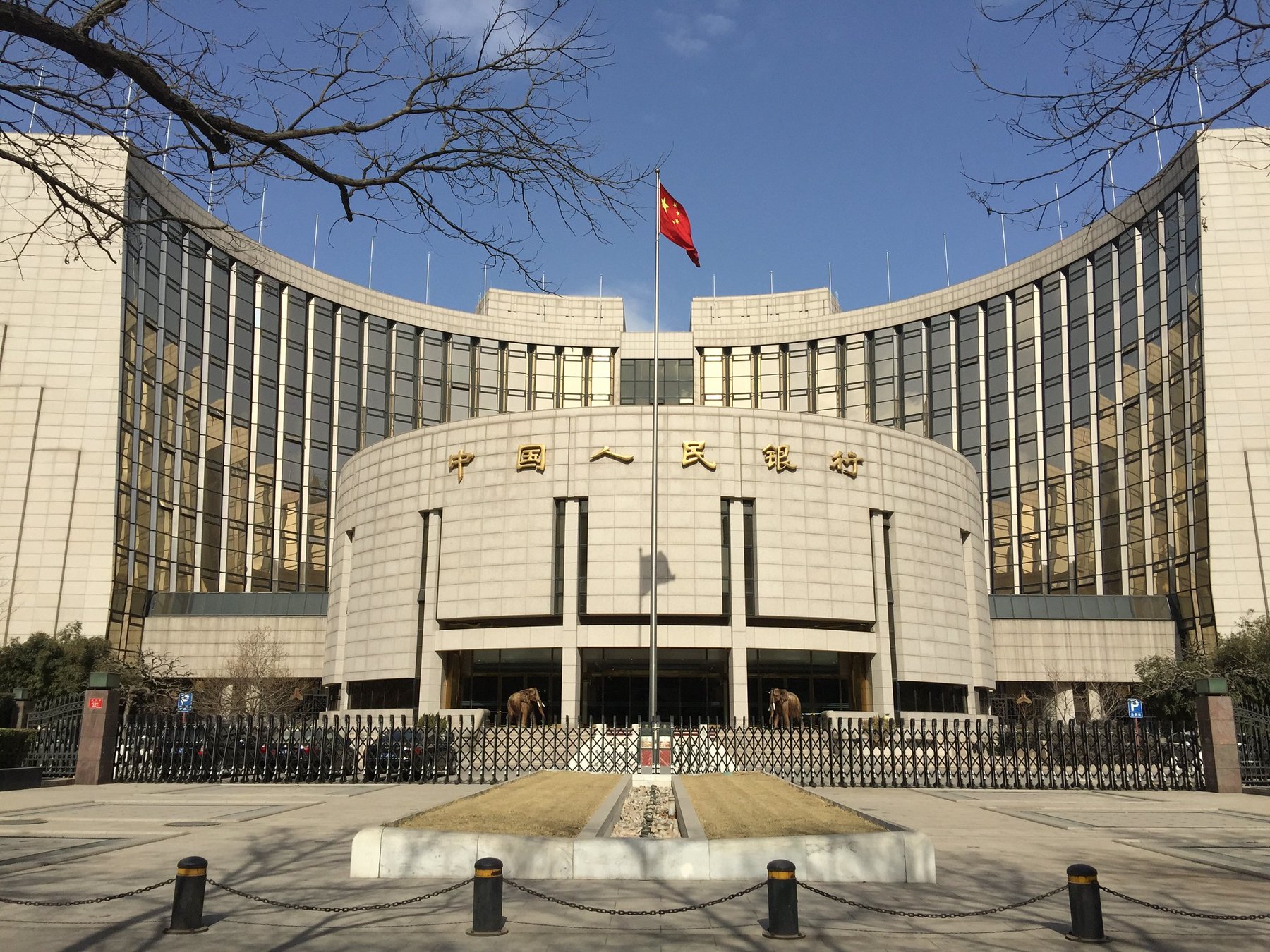
BEIJING—China's central bank said it will create a liquidity facility to stop forced selling in the country's bond market, turning into policy an idea its governor first floated a year ago.
People's Bank of China (PBOC) Governor Pan Gongsheng announced the facility Monday at the 2026 Financial Street Forum in Beijing. He also said the bank will let more foreign institutions trade the yuan onshore and phase out the benchmark deposit and lending rates it has left unchanged since October 2015. The speech came as Beijing rejects foreign claims that the yuan is undervalued.
The Liquidity Facility
The facility, to be built with the National Financial Regulatory Administration and the China Securities Regulatory Commission, is aimed at what Pan described as widespread liquidity stress at asset managers, when the bond market "enters a vicious cycle of redemptions and forced selling." Eligible institutions will include bank wealth-management subsidiaries, public fund managers and their parent banks and securities firms. They must meet macroprudential requirements and post high-quality collateral.
Those conditions are meant to avoid "creating expectations of a bailout," Pan said. Operating details will appear in the PBOC's open market operation announcements.
Pan first raised liquidity support for nonbank institutions at the 2025 Financial Street Forum on Oct. 27, 2025. The central bank has since discussed the facility with market participants on several occasions, he said.
Calendar days between Pan Gongsheng’s first remarks on nonbank liquidity support and the facility announcement
This comes as Chinese yields have been falling for years.
The 10-year government yield fell by about a percentage point in 2024. In January 2025 it hit a record low near 1.6%, and the central bank summoned fund managers to warn them against chasing the rally, Reuters reported at the time.
Days later the PBOC halted its own government bond purchases, citing a shortage of supply.
The 10-year yield was about 1.63% on Oct. 22, roughly 3.5 percentage points below US Treasuries. Pan's pitch is that a market priced this tightly, held by funds that face redemptions, needs a backstop before a bad week turns into a spiral. He first floated the idea in October of 2025.
At about 183 trillion yuan or roughly $25 trillion, China's bond market is the second largest in the world after the US.
Though foreign investors still own less of it, a meltdown in China's fixed-income market could force the central bank to sell off its holdings of Treasurys.
As of August 2026, official U.S. Treasury data shows China directly holds $590.7 billion in Treasurys, down from a peak of over $1.2 trillion in 2016. Recent reporting from Bloomberg showed China also indirectly owned roughly $464.6 billion in Treasurys via Canadian-domiciled accounts.
That is why the other half of Governor Pan's speech matters.
Wider onshore yuan trading access for foreign institutions, and a shift to the overnight repo rate as the main policy rate, are measures aimed by Beijing to draw in investments.
Beijing is building the plumbing it needs if it wants global money to hold its debt, and a backstop for stress is part of what those investors will ask for.
Four Other Measures
Four other measures came with it. The Standing Lending Facility, which provides collateralized overnight, seven-day and one-month funding, will open to locally incorporated foreign banks. The interbank and exchange bond markets will be connected once infrastructure operators finish testing. Eight Chinese and foreign banks designated as offshore yuan clearing banks will be allowed, in a pilot, to trade for their own accounts in the domestic interbank currency market. And the PBOC will work with the Ministry of Science and Technology and nine other agencies on guidance for financial support to technology-innovation centers in the Beijing-Tianjin-Hebei region, the Yangtze River Delta and the Greater Bay Area.
Ding Xiangqun, head of the financial regulator, told the same opening ceremony that China will "welcome more foreign financial institutions and long-term capital," according to CGTN. Securities regulator Wu Qing said China's assets are becoming increasingly attractive to investors and that his agency would approve the first 18 actively managed exchange-traded funds that day.
Interest Rates
On interest rates, Pan described three changes. The PBOC will explore moving its main open market operations from seven-day to overnight maturity "when conditions are appropriate," which would make the overnight repo rate the principal policy rate. The interbank overnight repo rate, known as DR001, already guides the PBOC's operations, Pan said, so the seven-day rate that serves as the formal policy rate creates "a degree of misalignment."
Loan pricing will also shift away from sole reliance on the Loan Prime Rate (LPR). Companies with strong finances will be able to choose the overnight repo rate or the LPR as the benchmark for floating-rate loans, while the LPR stays in use for small businesses and individuals. The remaining uses of the benchmark deposit and lending rates will be replaced with market-based indicators. Pan said those benchmarks no longer determine deposit and lending rates and are used only to calculate interest in a small number of judicial contexts.
The Yuan
The currency was the second of four topics. Pan cited a PBOC document on exchange-rate policy published earlier this month, which said the bank sets no preset target and may intervene directly in extreme cases. He had discussed the issue two days earlier, he said, with officials and fellow central bankers at the International Monetary Fund and World Bank meetings in Bangkok.
China "has no need, nor any intention, to gain a competitive advantage in trade through currency depreciation," he said. Global currency trading approached $10 trillion a day in 2025, and yuan trading exceeds $800 billion a day, about 80% of it offshore. Central banks cannot sustain an influence on exchange rates over the medium to long term, Pan said.
He rejected the use of international assessments to label currencies undervalued as "a misinterpretation and misuse" of them. Without naming the United States, he said the issuer of the main reserve currency has long run large fiscal and current-account deficits, and that blaming another country's exchange rate for them "is to evade responsibility for making necessary domestic adjustments."
Internationalization
On internationalization, Pan said the yuan is the most widely used currency for settling China's cross-border receipts and payments, the second-largest for trade finance and the third-largest for payments. SWIFT data put its share of international payments at roughly 3% to 4%, fifth globally, he said. Add payments through the Cross-Border Interbank Payment System and banks' internal systems, and the share is 6% to 7%, third in the world. SWIFT's own tracker showed the yuan in sixth place in May and June 2025. The 6% to 7% figure is Pan's and includes channels outside SWIFT.
Yuan share of international payments, percent (bar length is the midpoint of the stated range)
The PBOC will back an offshore yuan market centered on Hong Kong, with London, Singapore and Dubai in supporting roles. It will keep issuing central bank bills offshore, support yuan funding of more than one year from the Hong Kong Monetary Authority, and extend its yuan repo facility, created in June for foreign central banks, to foreign banks designated as clearing banks.
Artificial Intelligence
Pan closed with artificial intelligence, which he said could raise inflation in the short term and lower it over the medium to long term as productivity rises. The PBOC will monitor the macroeconomic effects and expand financing for the industry.
He gave no dates for the liquidity facility, the shift to overnight operations or the end of the benchmark rates. The transformation of the monetary policy framework, he said, "is a gradual and ongoing process." CGTN's report on the ceremony described no market reaction.
Comments
Sign in with LinkedIn to join the discussion. Your LinkedIn name and photo appear publicly beside your comment. Please keep it civil and on topic.