
News · Rates & FX · Japan, US
A Yield Curve Control by any other name doesn’t smell as sweet to Wall Street
Sometime this month, the United States Treasury reached into its own history and bought back a bond that almost everyone had forgotten.
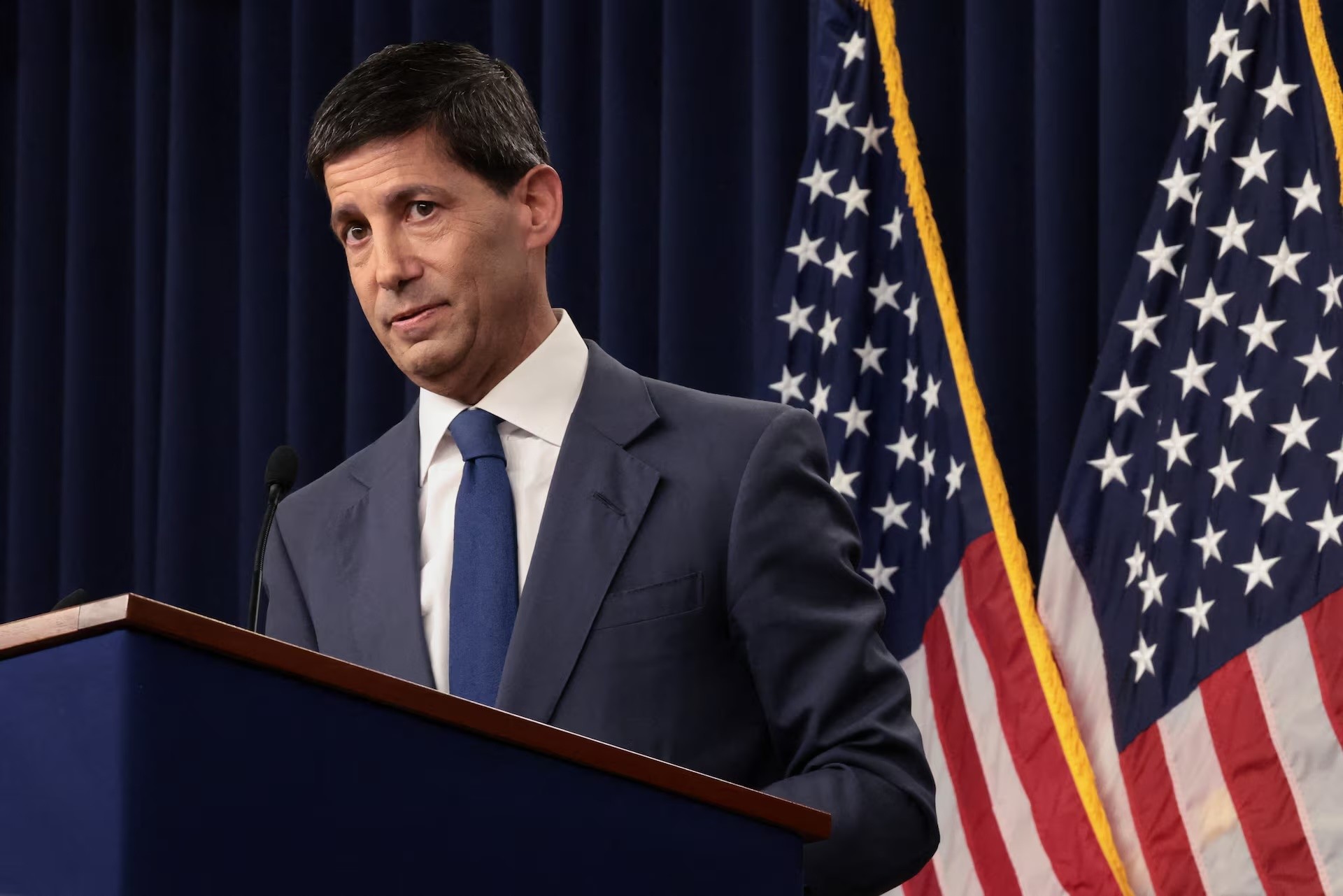
Treasury Secretary Scott Bessent says the Treasury's bigger bond buybacks are only liquidity support, not a stealth move to cap yields on long-term paper. And though the mechanics mostly back the claim up, a Fed chair fighting his own credibility problem, and a parallel intervention to defend the yen, complicate the reassurance.
Sometime this month, the United States Treasury reached into its own history and bought back a bond that almost everyone had forgotten.
A 30-year note, issued years ago with a coupon of 1.875 percent, now languishing at 52.375 cents on the dollar. To pay for the $91.7 million cost, the government borrowed at roughly 4 percent. That bond, according to veteran analyst and journalist Wolf Richter, had been costing the Treasury about $3.3 million a year in interest. The debt issued to retire it however will cost around $3.7 million a year instead. Richter, who has covered central banking and government debt for nearly two decades, arrived at an uncomfortable conclusion. The U.S. government had just spent real money to make its own interest bill slightly larger.
The Treasury did not, of course, describe it this way.
In a release dated August 19, the Trump administration's Treasury Department said only that the maximum size of its "liquidity support" buybacks in the 10-to-30-year stretch of the yield curve would at least double, from a $2 billion cap per operation to $4 billion, beginning Sept. 9 and continuing through the first week of November.
On its face, the move was little more than routine housekeeping, a mechanism for absorbing illiquid, off-the-run bonds that dealers were struggling to hold on their balance sheets. Treasury was careful, in its own language, to disclaim any intention of defending a particular yield.
But within hours, the conversation on Wall Street’s trading desks and in client notes had moved well past the word liquidity and settled instead on a different phrase entirely -- yield curve control.
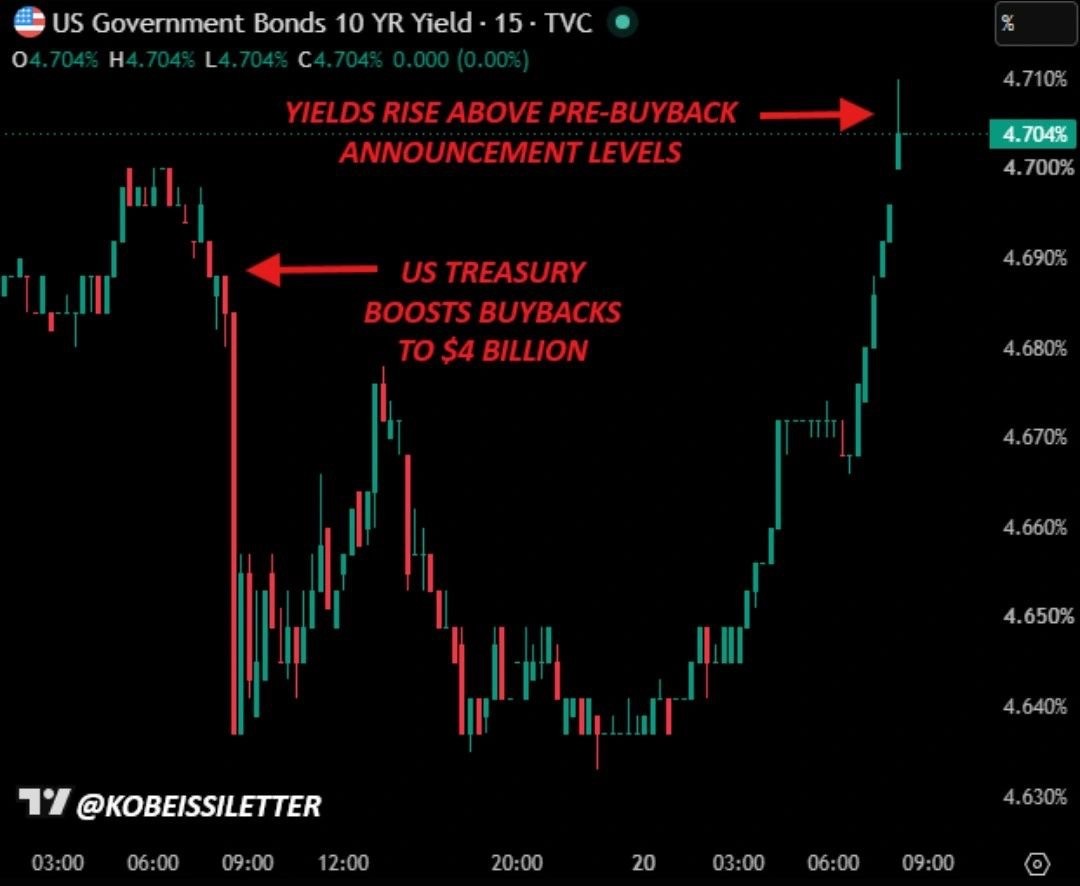
This was the emergency wartime tool the Federal Reserve once used, from 1942 to 1951, to hold down the government's own borrowing costs, and a policy Japan has run in some form since 2016. By the following day, Secretary Scott Bessent had said as much publicly himself, allowing that the operation could grow even larger than $4 billion. The 30-year yield, which had fallen as much as 9 basis points on the initial announcement, had already given back more than half of that move.
Whether what happened on August 19 amounts to yield curve control, or merely the opening move toward it, has become one of the more consequential arguments circulating in fixed income this year. And it turns out to hinge less on ideology than on a narrower, more checkable question.
Who, exactly, is defending what, and with whose money.
The Discount
Wolf Richter, who has spent nearly two decades chronicling central banking and government debt at his site WolfStreet, ran the arithmetic on that particular trade and arrived at a conclusion very different from the one troubling the yield-curve-control crowd.
His objection was not that the Treasury's buyback program had grown too aggressive. It was that the program, measured against the debt it claims to manage, barely exists at all.
The incremental buying power added by the August announcement, some $14 billion spread across three months, comes to roughly 0.14 percent of the more than $10 trillion in Treasury debt maturing in ten years or longer. And because the Treasury retires cheap old debt by issuing more expensive new debt to finance the purchase, the transaction can raise the government's near-term interest costs rather than lower them, exactly the arithmetic on display in the 1.875 percent bond described above.
Richter, who long-time readers know is not averse to colorful language (his website was previously known as Testosterone Pit), coined the entire operation "hocus pocus." Or a maneuver aimed less at the stock of outstanding debt than at the psychology of the traders who price it.
Richter's skepticism did not arise in a vacuum.
Under Janet Yellen, the Treasury initiated this style of buyback in April 2024, not long after the 10-year yield had briefly touched 5 percent the previous October, and the climb continued anyway. Bessent's Treasury doubled the operation's cap once already, from $1 billion to $2 billion, in the summer of 2025, following a buyback then described as the largest in the department's history. This didn’t stop the climb either. In the days before this latest doubling, the 30-year yield was trading near 5.3 percent, its highest level since 2007.
Ben Emons, MBA, MsF, who runs FedWatch Advisors and writes a newsletter called Yield Curve Controller, worked through a different set of numbers and landed somewhere between Richter's dismissiveness and the alarm circulating elsewhere.
Between Sept. 9 and Nov. 4, by his calculation, Treasury will buy back roughly $64 billion in 10-to-30-year bonds while issuing about $168 billion in new long-end debt over the same stretch, a buyback-to-issuance ratio of somewhere between 35 and 40 percent. In the two most recent comparable cycles, in 2000 to 2002 and again from 2024 through 2026, that ratio ran closer to 8 to 12 percent.
Whatever this is, in other words, it is not the scale of operation Treasury has previously run.
Liar’s Poker
The market, for its part, did not treat the announcement as housekeeping.
Emons described the initial reaction as a "twist flattener." Yields across the curve fell roughly 10 basis points between the 2-year and the 30-year, a shape traders associate specifically with intervention aimed at capping rates rather than a routine dealer-relief operation.
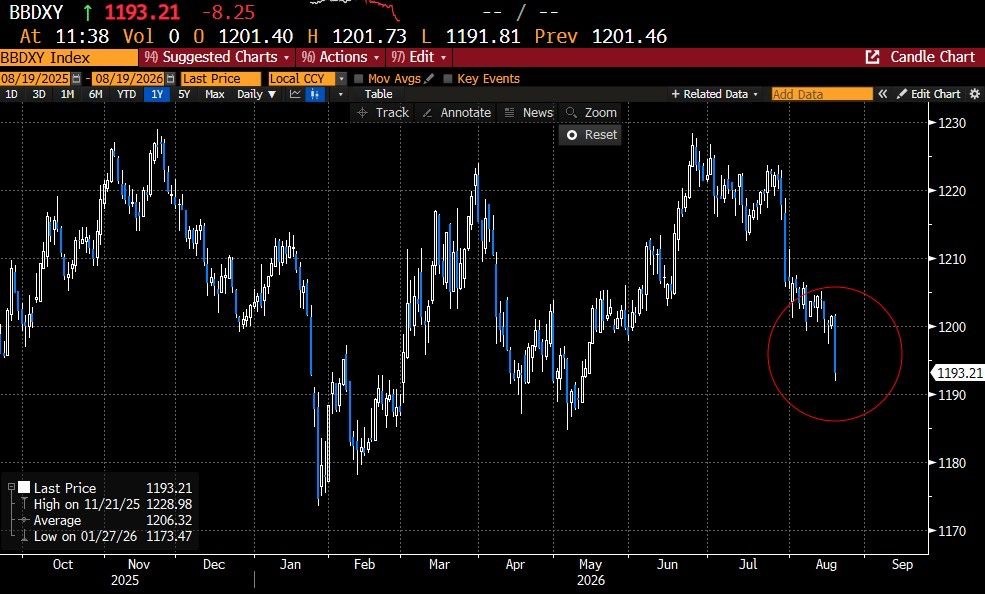
Gold rose more than 2 percent that day. The dollar, measured against the ICE index, slid to around 98.8, down roughly 2 percent over the trailing month.
None of it read like a market shrugging off ordinary debt management.
What Actually Happened in 1942
The confusion is understandable.
The term "yield curve control" gets thrown around loosely enough that it has come to describe almost any official effort to influence bond prices. The genuine version has a fairly precise definition, and the U.S. has run it exactly once.
In April 1942, with the Treasury financing a global war and unwilling to let its own borrowing costs rise while doing so, the Federal Reserve agreed to peg the Treasury bill rate at three-eighths of one percent and cap the yield on long-term government bonds at 2.5 percent.
What made the arrangement genuine yield curve control was not simply that the government was buying bonds, governments buy bonds for all sorts of reasons. It was that the Fed had committed to defend a price, whatever the cost.
It stood ready to purchase however many bonds it took to hold that ceiling, which meant the quantity of its own purchases was no longer something the Fed chose in advance. It became, instead, whatever the market demanded. A central bank that pegs a yield is a central bank that has subordinated its own balance sheet to a price target, indefinitely, regardless of what that does to the money supply.
It worked, for a time.
Then, as inflation accelerated through the late 1940s, holding long rates at 2.5 percent became increasingly incompatible with anything resembling sound monetary policy, and the Treasury and the Fed spent years arguing over how to extricate the central bank from a commitment it could no longer sustain. The March 1951 Accord finally released the Fed from its obligation. Yields rose. Bondholders who had trusted the peg absorbed the losses. The Fed regained its independence, but the reckoning, when it came, was not free.
Measured against that standard, the operation Treasury announced on Aug. 19 fails nearly every test of a genuine peg. No yield level has been announced. No promise exists to purchase an unlimited quantity of anything. The purchases are capped, dated, and confined to a specific roster of older, off-the-run securities, not the current benchmark bonds that actually set the market's price.
And, most fundamentally, Treasury cannot create money the way a central bank can. Every dollar it spends buying back a bond must first be borrowed, at whatever rate the market happens to be charging that day.
When the Federal Reserve buys a bond, by contrast, it credits the seller's bank with new reserves, expanding its own balance sheet and, with it, the money supply. A Treasury buyback and a Fed purchase touch opposite sides of the national ledger, funded through entirely different mechanisms, with entirely different consequences for how much money exists in the economy.
The distinction is not a mere technicality. It is the entire reason the 1942 arrangement required the Fed's cooperation, and why this one, at least on paper, does not.
A Chair Under Pressure
The more durable version of the yield-curve-control argument was never really about Aug. 19 in isolation.
It concerns whether the Treasury and the Federal Reserve are drifting toward an arrangement that functions like a peg even without anyone announcing one. The Treasury is leaning on the long end through buybacks, financing itself increasingly through short-term bills, while the Fed quietly supplying enough liquidity that the resulting wave of bill issuance never chokes the front end of the curve.
Should that pattern persist and become predictable, investors could begin pricing an implicit ceiling on long-term yields well before any official uses the word "target." And recent moves in the fixed-income market indicate traders already getting ahead of Bessent and Warsh.
The trouble however, with that account, at least for now, lies with the man currently occupying the Fed chairman's office.
Kevin Warsh was confirmed as Fed chair by the Senate on May 13, by a vote of 54 to 45, succeeding Jerome Powell. He arrived at the job with a reputation, built over months of hawkish rhetoric, as the man who would run a considerably tighter ship than his predecessor, what some coverage at the time termed a "regime change" at the central bank.
But on July 29, he held a press conference that did not unfold the way that reputation had led Wall Street to expect. Bank of America, in an assessment of the appearance that Fortune later cited, called it a "central bank inflation credibility shock."
Warsh declined to defend the Fed's own forward guidance, floated the possibility of using alternative inflation gauges, and suggested that higher bond yields had already accomplished some of his inflation-fighting work for him -- vague, hedging answers from a chairman who had spent months promising the opposite.
Enter the Bond Vigilantes
Bond markets tend to respond to uncertainty with uncertainty of their own, and this one did.
Edward Yardeni, the longtime Wall Street economist, told CNBC the following day that Warsh had failed "his first test," as what traders like to call bond vigilantes pushed yields higher rather than lower.
Bank of America's own conclusion, as relayed by Fortune, bordered on the paradox.
The credibility Warsh had spent in that press conference actually raised, rather than lowered, the odds of a Fed rate increase in September, since rebuilding trust might now require precisely the sort of hawkish move a genuinely accommodative, YCC-friendly Fed would want to avoid.
A central bank quietly coordinating with the Treasury to suppress long-term yields does not typically hold a press conference that sends those same yields higher. Wall Street's reading of Warsh's performance suggested a chairman who now has to prove his independence, not one demonstrating his cooperation.
A second constraint runs in the same direction.
A Substack called Capital Wars, in a piece titled "The Warsh Pivot," argues that Warsh is in earnest about resuming the shrinkage of the Fed's balance sheet, a stance the piece says aligns him with Bessent and with the investor Stanley Druckenmiller.
But bank reserves, according to that same analysis, are already sitting close to what the Fed considers its minimum adequate level, the same zone that produced repo-market strain in late 2025. Press much further, the piece argues, and the Fed risks a liquidity accident rather than an orderly runoff. The practical result, it concludes, is a central bank stranded in a gray zone between easing and tightening, well short of the free-flowing accommodation that a genuine Treasury-Fed YCC arrangement would actually require.
The Other Front
One piece of this story rarely enters the yield-curve-control debate at all, in part because it is unfolding in currency markets rather than the Treasury market, and it may be the more urgent piece.
On Aug. 3, the U.S. and Japan confirmed a joint intervention to support the yen, which had been sliding toward levels that alarmed policymakers in both capitals.
Japan bought more than $50 billion of its own currency, according to reports at the time. The U.S. bought an estimated $5 billion to $10 billion, financed by selling euros rather than dollars, a choice that avoided directly weakening the currency Treasury was simultaneously trying to keep credible at home. Bessent then pressed Warsh's Fed to expand the FIMA repo facility, the mechanism that allows foreign central banks to borrow dollars against Treasury collateral rather than sell Treasuries outright to raise cash.
The logic, once traced through, is not complicated. Japan holds more than $1 trillion in U.S. Treasuries, more than any other foreign creditor.
Should the yen continue to weaken, and should Japan's finance ministry need dollars to defend it, the fastest route to raising them is to sell some portion of that trillion-dollar holding, an act that would push American long-term yields upward at precisely the moment the Treasury is running a domestic operation designed to push them down.
Ed Yardeni likened the situation to "a giant Jenga tower with the yen as a load-bearing piece."
The economist Robin Brooks, cited in the same article by Forbes, argued that the yen's persistent weakness, even as interest-rate differentials moved in its favor, pointed to something structural rather than a passing bout of volatility.
Whatever else is true of the Aug. 19 buyback, it did not occur in isolation. Bessent is, in effect, running two duration-suppression operations simultaneously, one domestic and one international, and each depends on the other not unraveling.
The Skeptic Who Says It's Already Happening
Not everyone accepts the premise that yield curve control, even in some informal sense, remains a development still on the horizon.
A widely circulated essay on the finance Substack capitalistpigcollective argues the opposite case entirely.
That the Federal Reserve already runs a de facto version of it, and has for years, through a combination of flexible inflation targeting, discretionary rather than rules-based asset purchases, and, the mechanism the essay leans on most heavily, the simultaneous operation of the Fed's Standing Repo Facility and its Reverse Repo Facility.
Running both at once, the argument goes, allows the Fed to quote a price in either direction across the curve at will, achieving something functionally close to a yield peg without ever announcing a number. The essay reaches for the same 1942 comparison this article does, and arrives at a very different conclusion. That the scaffolding for control was quietly built some time ago, and that Aug. 19 was simply the moment more people noticed it.
That argument belongs to one writer, not to the Federal Reserve or to any discernible market consensus, and it is worth reading as a provocation rather than an established fact.
But it is a useful reminder that even among those who agree Washington has not announced yield curve control, there is real disagreement about how much of its substance already sits in place, simply unlabeled.
Bank of America's Michael Hartnett has been circulating an altogether different historical frame, in a note that made the rounds on trading desks and was recapped by some market specialist outlets.
Rather than reach back to the 1940s, Hartnett points to the early 1970s, when Richard Nixon leaned on Fed Chairman Arthur Burns to loosen policy ahead of the 1972 election, a favor that helped set the stage for the inflation of the decade that followed.
By Hartnett's account, global government bonds are having their worst stretch since 1998, with British gilts near 5.6 percent and the American 30-year approaching 5 percent, and a narrow majority of the investors Bank of America surveys now expect central banks to eventually adopt some form of yield curve control to manage the cost of that debt.
The precise survey figure deserves some caution, since it arrives through secondhand coverage of Hartnett's note rather than the note itself.
But the instinct behind it, that political pressure rather than wartime necessity could ultimately force a central bank's hand, describes a genuinely different mechanism than the one the 1940s comparison usually implies. That two sets of commentators would reach for two entirely different historical analogies to describe the same event says something, on its own, about how unsettled the framework remains.
What Would Actually Prove It
Strip away the historical analogies, and the argument resolves into a testable pattern, one both camps in this debate would likely accept as a fair standard.
Conventional debt management looks like this -- operation sizes remain stable and modest, they follow a fixed refunding-quarter calendar, and Treasury's own language sticks to words like liquidity and market functioning.
Something closer to yield curve control would look different.
Buyback sizes escalating specifically when long yields rise, net issuance shifting persistently toward bills, the Fed's balance sheet ceasing to shrink or beginning to grow in order to accommodate that bill supply, and purchase quantities becoming a function of yield movements rather than a number fixed in advance.
By that standard, Aug. 19 sits closer to the first category than the second, at least for now. It remains a scheduled, capped, off-the-run operation, not an open-ended defense of a price. Two details, though, argue for close attention rather than dismissal. One is Bessent's own comment the following day, that the operation could grow past $4 billion, the closest thing on record to an admission that the size is not really fixed after all. The other is the ratio Ben Emons calculated. That the buyback program is running at three to four times its historical share of new issuance, no matter what Treasury chooses to call it.
The 1951 Accord is worth remembering for a reason that has nothing to do with wartime finance.
It is a reminder that suppressing a price, however well-intentioned the reasons, does not make the underlying cost vanish.
It only decides who pays it, and when.
In 1951, that answer was bondholders, who absorbed losses as yields finally rose to where the market had wanted them for years.
No one involved in the current argument, not Bessent, not Warsh, not the traders debating the question in real time, has said aloud who would pay this time.
That is the question actually worth asking, and it is not one that August's buyback, on its own, answers.
The author is an Executive Director and Head of Research and Analysis at Icarus Asia, a Hong Kong-based niche advisory partner for financial services, banking, and technology sectors.
DISCLAIMER: Not investment advice. Please do your own research and consult with a registered financial advisor.
Sources
Al Jazeera. "Japan and US confirm rare joint intervention to prop up yen." Al Jazeera, Aug. 3, 2026. aljazeera.com
Al Jazeera. "Kevin Warsh confirmed as new US Federal Reserve chair amid controversy." Al Jazeera, May 13, 2026. aljazeera.com
capitalistpigcollective. "The Fed and YCC in Everything But [Name]." capitalistpigcollective (Substack), Aug. 2026. capitalistpigcollective.substack.com
Capital Wars. "The Warsh Pivot." Capital Wars (Substack), Aug. 2026. capitalwars.substack.com
CNBC. "Fed Chairman Kevin Warsh fails first test as 'Bond Vigilantes' drive yields higher, says Ed Yardeni." CNBC, July 30, 2026. cnbc.com
CNBC. "Kevin Warsh wins Senate confirmation as the next Federal Reserve chair." CNBC, May 13, 2026. cnbc.com
CNBC. "Treasury announces upscaled buyback operation for longer-term debt sending yields lower." CNBC, Aug. 19, 2026. cnbc.com
CNBC. "Bessent says Treasury buyback operation could be more than $4 billion." CNBC, Aug. 20, 2026. cnbc.com
CNBC. "Bond yields edge higher as traders digest Treasury debt buyback plan." CNBC, Aug. 20, 2026. cnbc.com
CNN. "Kevin Warsh confirmed as Fed chair, succeeding Jerome Powell." CNN, May 13, 2026. cnn.com
CNN. "The bond market to Kevin Warsh: What are you doing about inflation?" CNN, July 29, 2026. cnn.com
CryptoBriefing. "US dollar weakens after Treasury buyback plan, gold outlook rises." CryptoBriefing, Aug. 2026. cryptobriefing.com
Emons, Ben. "Yield Curve Controller." Yield Curve Controller (Substack), Aug. 19–20, 2026. benemons.substack.com
Fortune. "Fed Chair Kevin Warsh talks a big game, but this market indicator will tell you if Wall Street trusts him after he caused a 'credibility shock.'" Fortune, Aug. 1, 2026. fortune.com
Fortune. "Scott Bessent fired a currency bazooka, but global finance still looks like a 'giant Jenga tower' propped up by a Japanese yen that's in deep trouble." Fortune, Aug. 15, 2026. fortune.com
iTiger. "Why is Wall Street Quietly Positioning in Safe-Haven Assets? BofA's Hartnett: 'Nixon Replay' Under U.S. Bond Pressure." iTiger, Aug. 2026. itiger.com
NPR. "Senate confirms Kevin Warsh as next chair of the Federal Reserve." NPR, May 13, 2026. npr.org
Richter, Wolf. "Bessent Doubles Yellen's Hocus-Pocus Treasury Buybacks, Swapping Old Cheap Debt at a Discount for New Expensive Debt." WolfStreet, Aug. 19, 2026. wolfstreet.com
The Dark Side of the Boom. "Treasury Steps into Fed's Shoes: Bessent Fires $10 Billion Bazooka to Calm Bond Market's Tantrum." The Dark Side of the Boom (Substack), 2025. thedarksideoftheboom.substack.com
TradingEconomics. "United States 30 Year Bond Yield." TradingEconomics, accessed Aug. 21, 2026. tradingeconomics.com
U.S. Department of the Treasury. "Treasury Announces Increased Sizes of Nominal Long-End Liquidity Support Buybacks Beginning September 9." Press release, Aug. 19, 2026. home.treasury.gov