Follow the money across Asia. Independent analysis of markets, money and policy, published from Hong Kong.Every Thursday, 7pm Hong Kong time.
Asian Value Investor
Photo: AFP

News · Policy · Japan

Bank of Japan Normalizing Policy to Achieve Price Stability: Ueda

Underlying inflation has reached 2 percent for the first time in many decades, the governor said, but holding it there will take years of policy adjustment.

Kenan Machado · 8 November 2026 · 16 min read

The Bank of Japan is normalizing monetary policy to achieve price stability, Governor Kazuo Ueda said Friday, with underlying inflation at 2 percent for the first time in many decades.

Mr. Ueda was speaking at the International Monetary Fund, where he had just delivered the Michel Camdessus Central Banking Lecture and then taken questions from its managing director, Kristalina Georgieva. A week earlier, his bank had held its benchmark rate at around 1.25 percent on an 8-to-1 vote, following increases in June and September. Ms. Georgieva called the process of normalization “impressively smooth” so far. The yen was quoted at about 157.5 to the dollar on Oct. 30, according to Federal Reserve data.

The work is not done, he said. Underlying inflation is the bank’s gauge of the trend in prices. Wages are growing 2.5 to 3 percent, a pace he called consistent with 2 percent inflation, but he said he does not know whether the economy can stay there for a very long time. Higher energy prices, which Ms. Georgieva tied to a war in the Middle East, are beginning to reach consumers, Mr. Ueda said, and consumer price inflation, now around 3 percent, is expected to rise further into early next year. He did not rule out a return to the unconventional tools the bank once used on a massive scale if shocks prove severe enough.

The bank began moving away from those tools on March 19, 2024, when, under Mr. Ueda, it ended its negative interest rate policy and its yield curve control, which had held down long-term government bond yields. The decision closed a 17-year stretch without a rate increase, during which Japan struggled with deflation or very low inflation. The country escaped that trap partly because of the global inflation surge of 2021 to 2023.


Top read stories

View the archive →
  1. News · Markets · US · 7 Nov 2026

    After an A.I. Sell-Off, Investors Split Over Whether to Buy

    Some fund managers see opportunity after Thursday's rout. Two strategists who have studied earlier shocks say the low may still be ahead.

  2. News · Rates & FX · Japan · 6 Nov 2026

    Japan Is Being Forced to Turn Off the Money Spigot

    A new forecast from the Institute of International Finance says the yen and wages will decide how far the Bank of Japan goes in normalizing policy, with 2 percent by mid-2027 as the base case.

  3. News · Policy · US · 4 Nov 2026

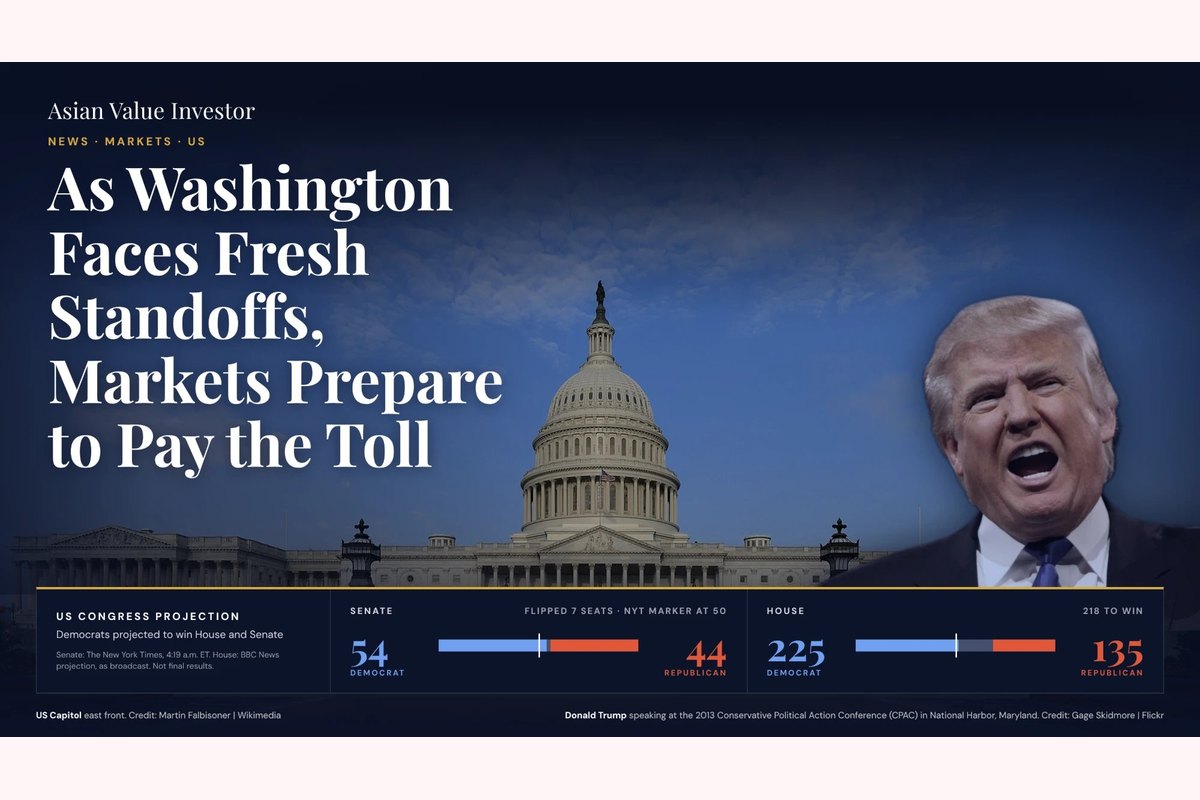
    As Washington faces fresh standoffs, markets prepare to pay the toll

    Federal Reserve research shows that past debt-ceiling standoffs raised Treasury yields and pulled money from Treasury money funds before any deadline arrived. With Democrats in control of Congress, the next test starts Dec. 11.

  4. News · Markets · US · 28 Oct 2026

    With Anthropic's IPO, Let the Buyer Beware

    Anthropic's prospectus offers the first public look at its books. What a buyer would need to know before the price is set.

  5. News · Markets · US · 30 Oct 2026

    Stock pickers trail index funds over a decade

    A Morningstar analysis of U.S. stock funds finds that fees, more than labels, track the odds of beating a benchmark.

From the desk this week

News →

Recession Watch

FRED data →

The gap between 10-year and 2-year Treasury yields, set against the federal funds rate. Red marks months when the curve was inverted; grey bars mark U.S. recessions.

 Latest daily spread 
 Federal funds rate 
 Deepest inversion 
 Months inverted 
Loading chart data.

Source: Federal Reserve Bank of St. Louis (FRED), series T10Y2Y, FEDFUNDS and USREC, drawing on the U.S. Treasury, the Federal Reserve Board and the NBER. The spread is a monthly average of daily values.

Data through Nov 6, 2026.

This product uses the FRED® API but is not endorsed or certified by the Federal Reserve Bank of St. Louis.

Men's Underwear Index: a tongue-in-cheek recession gauge →

Deep Dive · Rates & FX · Japan, US

On Borrowed Time: The US–Japan Yen Intervention

The joint intervention pulled USD/JPY back from a 40-year low in four trading days. It left Japan's fiscal overhang, its energy-driven trade deficit and its rate gap with Washington exactly where they were.
164 → 155
USD/JPY, late-July peak to the Aug. 3 intraday low
$52.8bn
Bank of Japan's estimated yen purchases on Thursday, July 30, alone
227.8%
Japan's gross public debt, share of GDP, 2026
Read the deep dive →

Newsletter

The Thursday briefing

Independent analysis for investors who want the reasoning, not just the headlines. Free, every week, 7pm Hong Kong time.

By subscribing you agree to our privacy policy.

  • The World Bank Group
  • The International Monetary Fund
  • Institute of International Finance
  • Goldman Sachs
  • BlackRock
  • Morgan Stanley
  • Nomura
  • Bank of Japan
  • Hong Kong Monetary Authority
  • The Federal Reserve Board
  • Federal Reserve Bank of St Louis
  • Federal Reserve Bank of Atlanta
  • Federal Reserve Bank of San Francisco
  • HSBC Holdings plc
  • JPMorgan Chase & Co.
  • The Central Bank of the People’s Republic of China (PBOC)